About Thalassarche carteri (Rothschild, 1903)
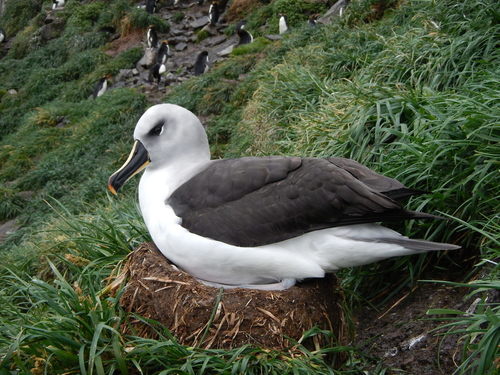
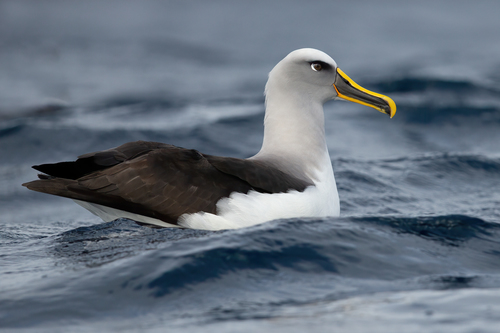
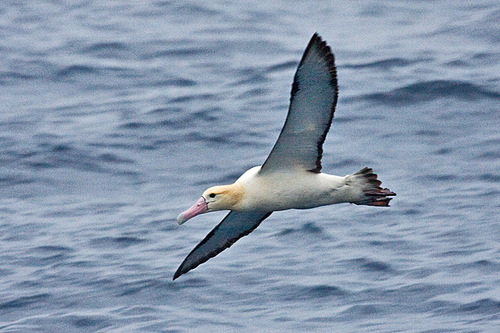
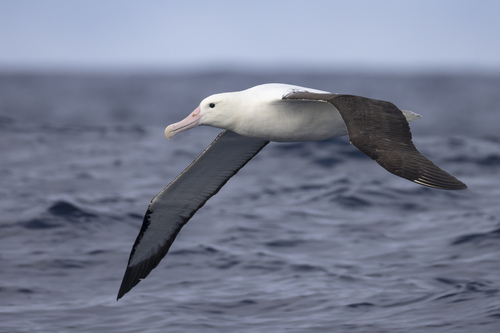
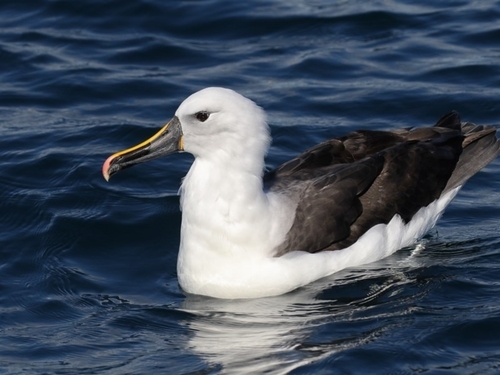
The Indian yellow-nosed albatross (Thalassarche carteri) has an average weight of 2.55 kg (5.6 lb), a body length of 76 cm (30 in), and a wingspan of 2 m (6.6 ft). Adult individuals have a pale grey or white head and nape, paired with a dark grey mantle, upperwing, and tail. Their rump and underparts are white, and their underwing is white with a black tip and a narrow black margin along the leading edge. The adult bill is black, with a yellow upper ridge and a red tip. Juveniles have a white head and an entirely black bill. This species is hard to tell apart from the closely related grey-headed albatross and Atlantic yellow-nosed albatross. It was long considered the same species as the Atlantic yellow-nosed albatross, and some taxonomists still treat it as a subspecies of that bird. The Indian yellow-nosed albatross can be separated from the Atlantic yellow-nosed albatross by its head, which has lighter grey plumage. This albatross breeds on the Prince Edward Islands, Crozet Islands, Kerguelen Island, Amsterdam Island (specifically on the Falaises d'Entrecasteaux), and St Paul Islands in the Indian Ocean. When foraging for food during incubation, individual birds can travel up to 1,500 km (930 mi) away from their breeding colony. At sea, its range extends from South Africa to the Pacific Ocean just beyond New Zealand, between 30° S and 50° S. Like all albatrosses, the Indian yellow-nosed albatross breeds in colonies. It breeds every year, and adults reach breeding age at eight years old. It builds a mud nest in bare rocky areas, tussock grass, or ferns, and lays a single egg each breeding attempt. The nesting season starts in August, and egg laying takes place around September or October. Incubation lasts approximately 70 days. After hatching, the chick takes around 115 days to fledge.