About Textrix denticulata (Olivier, 1789)
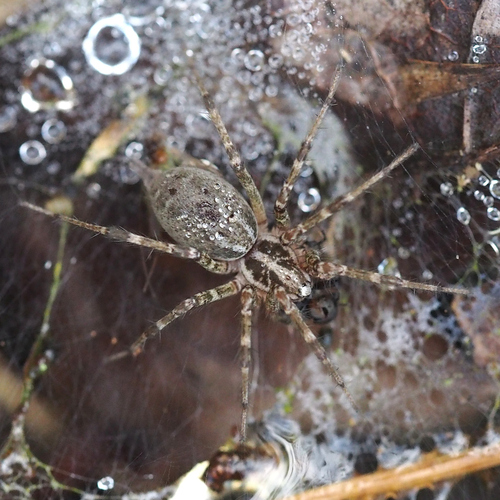
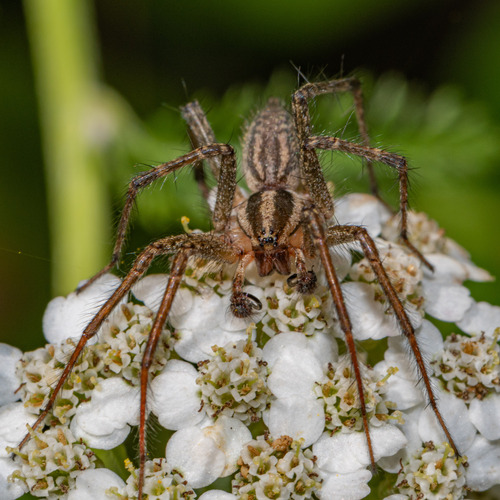
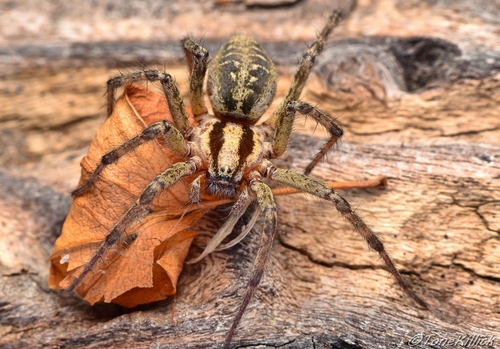
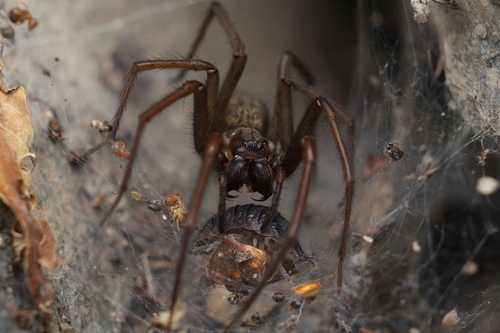
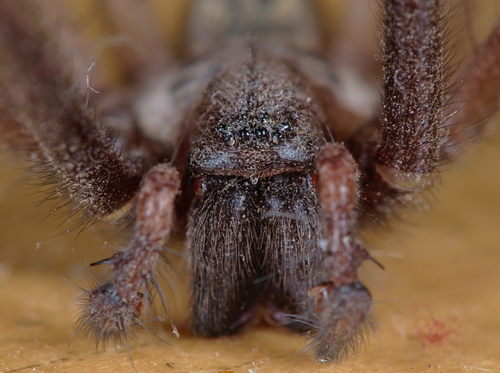
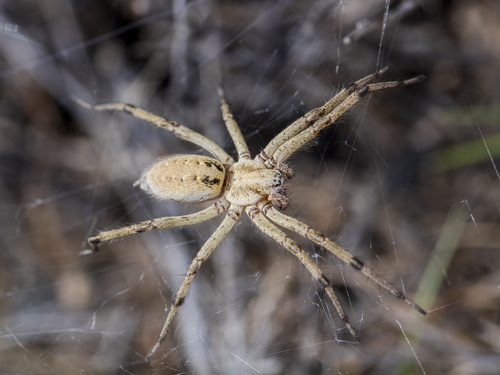
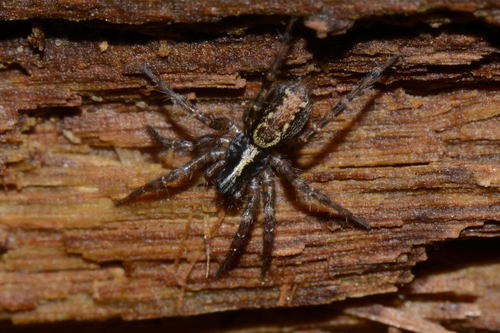
Males and females of Textrix denticulata have very similar general appearance. The carapace is dark brown and marked with a light-colored median band. This species has a narrow head with steep sides, a shape similar to that of wolf spiders in the genus Pardosa. The abdomen is dark brown; toward the anterior end it has a light horseshoe-shaped marking, which breaks into a series of light spots toward the posterior end. Vague, somewhat reddish chevrons are present between the horseshoe mark and the posterior spotting; these appear because hair coating is relatively thinner in this area, allowing the abdomen’s background color to show through. The legs are yellow-brown, with dark annulations and rings of white hairs. Adult females have a total body length of 7–8 mm, while males are slightly smaller, reaching 6–7 mm. Textrix denticulata inhabits sunny forest edges, rocks, and walls, and is sometimes found inside houses. In Great Britain, it occurs on stony ground, in rocky crevices, on low bushes, and under bark, in both inland and coastal habitats. In Great Britain, it is also equally common inside houses and on some disused stony industrial sites. Textrix denticulata is widespread across most of Northern Europe, but is absent from the northern and eastern parts of the region. In Great Britain, this spider is common in the north, less common in the south, and very rare in the southeast.