About Tetrarthria variegata Dallas, 1851
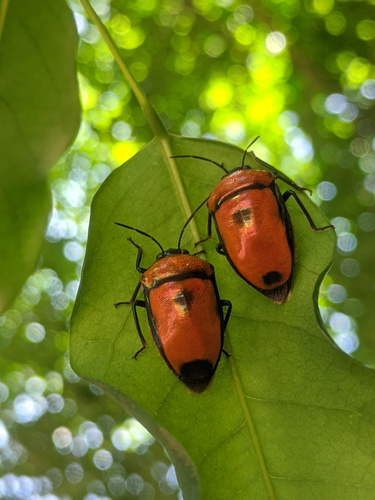
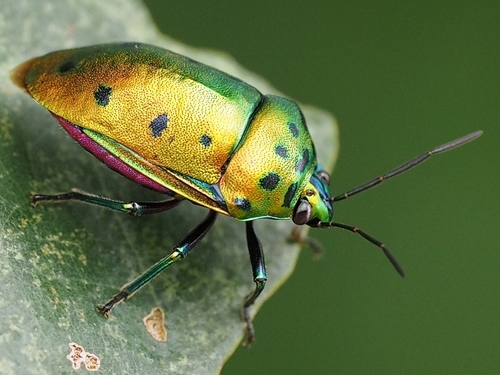
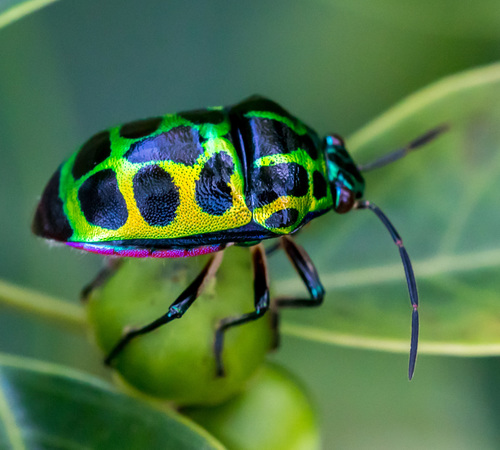
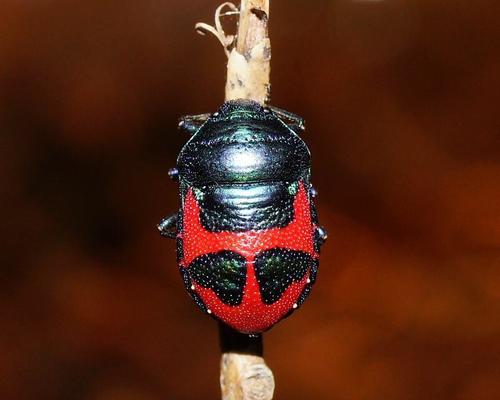
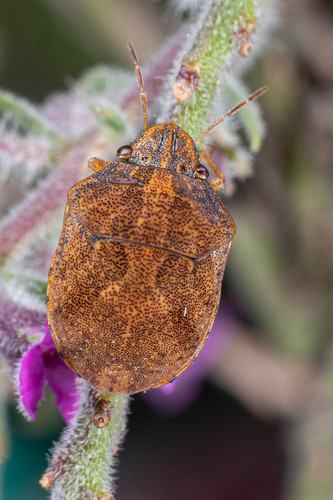
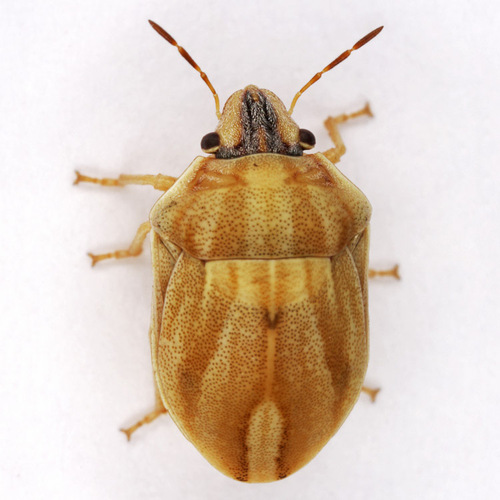
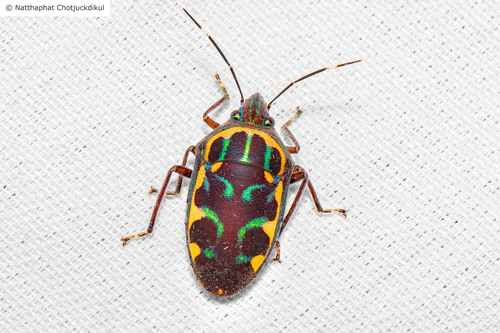
Tetrarthria variegata Dallas, 1851 is a species of plant bug in the family Scutelleridae. The genus Tetrarthria only has one recognized species, Tetrarthria variegata. The genus is unique within Scutelleridae for having four-segmented antennae. This species shows high variability in both coloration and patterning: some individuals are a uniform creamy brown, while others have patterned markings. In the past, many of these distinct color forms were incorrectly described as separate species. The species is widely distributed across South and Southeast Asia, and has been recorded as far east as Japan. Its spread is tied to agricultural activity. Tetrarthria variegata feeds on a large number of agricultural crop plants, and is considered a pest of these crops. William Sweetland Dallas first described this species in 1851, giving it its current binomial name and placing it in its own new genus. The type specimen of Tetrarthria variegata originated from the Philippines, and was part of a collection assembled by Hugh Cuming. Morphological characteristics of this species include: when at rest, the tip of the hindwing membrane juts out slightly; the tip of the proboscis, also called the labium, extends past the middle of the abdomen; a slight furrow on the abdominal ventrites holds the proboscis, while no furrow is present on the sternal region; the head has a protruding central lobe, and the rostrum tip reaches the hind margin of the fourth abdominal ventral segment; the basal segment of the antenna is short and does not reach the tip of the head; of the remaining three antenna segments, the second and fourth are approximately the same length, each twice as long as the first segment; the third antenna segment is the longest, equal in length to the first and second segments combined; legs have three tarsi. Two former species originally placed in Tetrarthria are no longer classified here: Tetrarthria flagrans, described by Walker in 1867, is now placed in the genus Paracalliphara, while Tetrarthria nigra, also described by Walker in 1867, is a synonym of Calliphara praslinia.