About Tetranychus urticae Koch, 1836
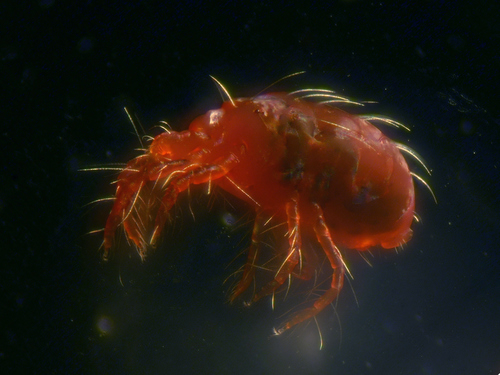
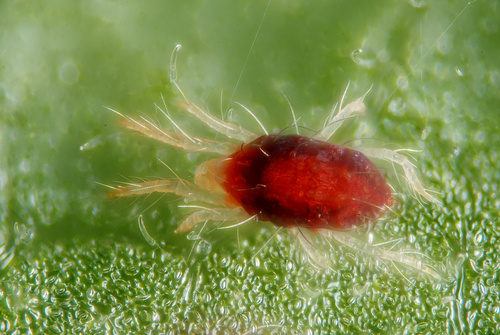
Tetranychus urticae Koch, 1836 is an extremely small species barely visible to the naked eye, appearing as reddish, yellow, or black spots on host plants. Adult females measure approximately 0.4 mm (0.016 in) in length, and adult mites sometimes spin a fine web on and underneath leaves. Originally native only to Eurasia, T. urticae has since gained a cosmopolitan distribution, and is now a common pest in a wide range of agricultural systems. This spider mite is extremely polyphagous, and can feed on hundreds of different plants. These include most vegetables and food crops, such as peppers, tomatoes, potatoes, pepinos, beans, maize, and strawberries, as well as ornamental plants such as roses. It is the most prevalent pest of Withania somnifera in India. This species lays its eggs on leaves, and harms host plants by sucking cell contents from leaves one cell at a time, leaving tiny pale spots or scars where green epidermal cells have been destroyed. While individual lesions are very small, an attack by hundreds or thousands of spider mites creates thousands of lesions that can significantly reduce the plant's photosynthetic capability. The mites feed on single cells by piercing them with a stylet-like mouthpart and removing the cell contents, causing damage to the spongy mesophyll, palisade parenchyma, and chloroplasts. T. urticae populations can grow very quickly in hot, dry conditions, expanding to 70 times their original size in as little as six days. The natural predator of T. urticae, Phytoseiulus persimilis, is commonly used as a biological control agent, and is one of many predatory mite species that prey mainly or exclusively on spider mites. T. urticae is among the few animals known to be able to synthesise carotenoids. Just like in aphids and gall midges, the genes that enable carotene synthesis appear to have been acquired through horizontal gene transfer from a fungus.