About Tetranychus lintearius Dufour, 1832
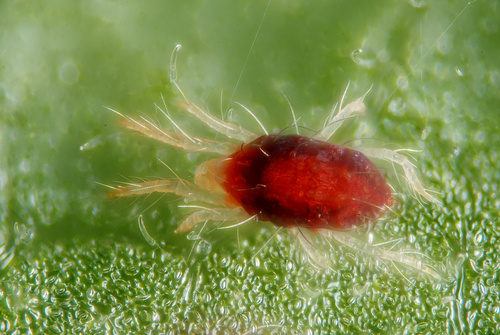
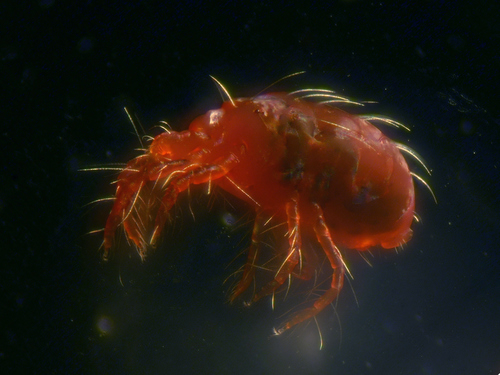
Tetranychus lintearius, a species of spider mite, is commonly known as the gorse spider mite. It is used as a biological pest control agent against common gorse, a noxious weed in some countries. Adult gorse spider mites are half a millimeter long and bright red in color. They live in colonies within shelters of spun silk that span across multiple branch tips. Infested host plants are easily recognizable by these large, cobweb-like silk sheets. Over a three- to four-week adult lifespan, a female gorse spider mite lays between one and four eggs each day. First-stage nymphs are tiny enough to be dispersed by wind, while nymphs that remain in place help the colony expand as it grows. This mite species is native to Europe, where it causes more damage to gorse plants than any other organism. The gorse spider mite appears to be host-specific and does not feed or attack any other plant species. Both adult and nymph mites damage gorse plants by piercing plant tissues during feeding. Heavy infestations of gorse spider mites reduce gorse flowering and can stunt the growth of plant branches. The species is widespread across parts of Australia, including Tasmania. It was introduced to the northwestern United States and Hawaii in the 1990s, and is now permanently established on gorse in these areas. The gorse spider mite has natural predators that can severely reduce its population; these predators include the predatory mite Phytoseiulus persimilis and the ladybird species Stethorus punctillum.