About Tetraneura ulmi (Linnaeus, 1758)
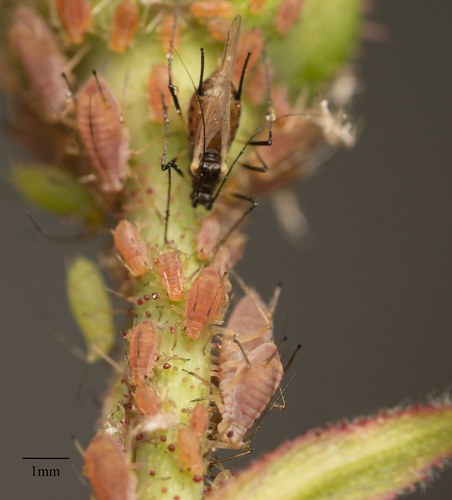
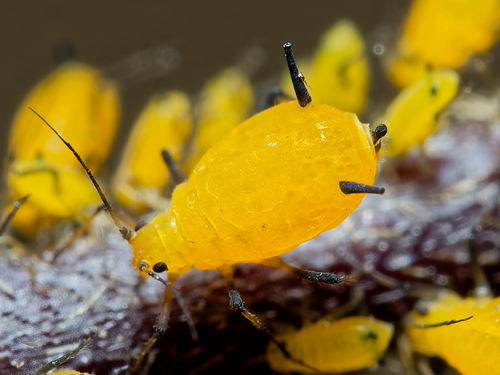
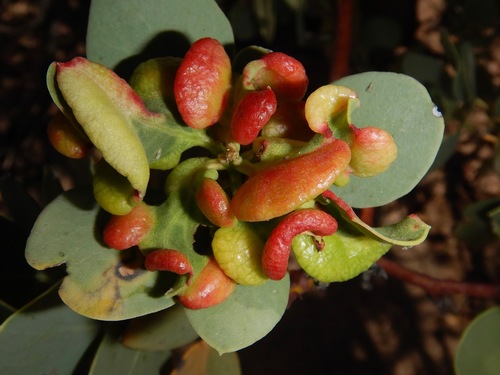
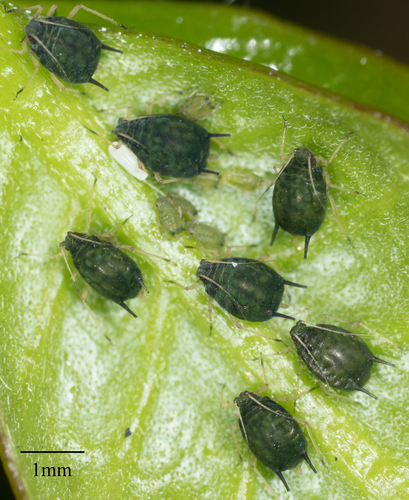
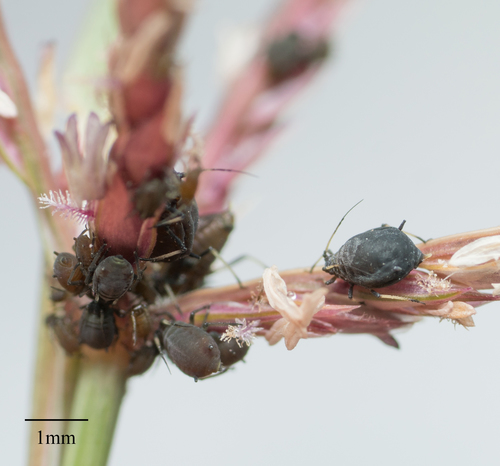
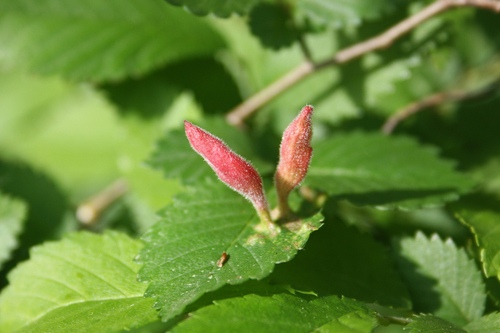
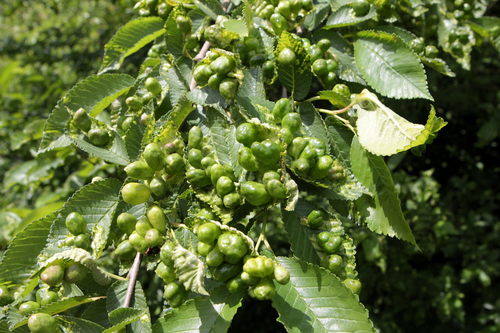
Tetraneura ulmi induces characteristic galls on the leaves of elm trees. Fully formed galls are stalked, club-shaped, smooth pouches that reach 7 to 15 mm in height. Each gall contains a feeding nymph and accumulates waxy material inside. Partially developed galls appear as pale yellow patches with irregular lumpy projections on the upper surface of the elm leaf. Young galls may have a hairy opening on the leaf’s underside. The life cycle of Tetraneura ulmi proceeds as follows. Mature asexual females exit the galls during summer and lay their eggs on the roots of grass. These aphids are pink, orange, or purple, measure 2 to 3 mm long, and are covered in a thin layer of powdered wax. In autumn, winged adult aphids fly back to elm trees and give birth to wingless individuals of both sexes. After mating, each fertilized female lays a single egg. A female nymph hatches from the egg the following spring, and begins feeding on the underside of an elm leaf. The leaf responds to feeding by growing a tiny yellowish pimple on its upper surface, which is the early stage of the gall. The nymph moves into this developing gall, continues feeding, and produces new offspring. Galls of Tetraneura ulmi have been recorded on small-leaved elm (Ulmus minor) and wych elm (Ulmus glabra). They have also been found rarely on American elm (Ulmus americana), David elm (Ulmus davidiana), and European white elm (Ulmus laevis).