About Tetragonula carbonaria (Smith, 1854)
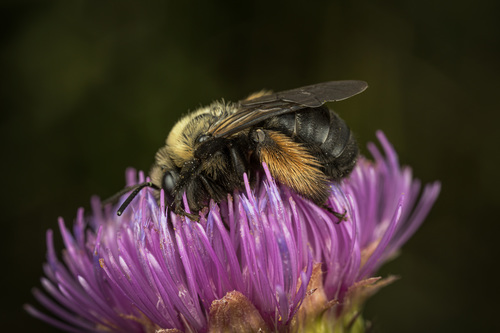
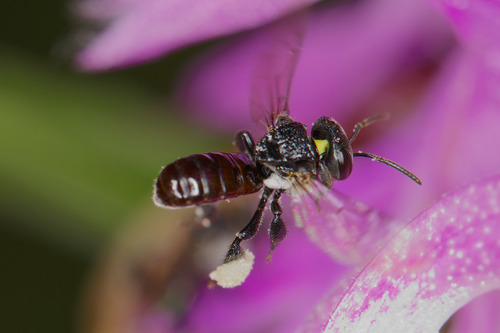
Tetragonula carbonaria (Smith, 1854), previously called Trigona carbonaria, is a stingless bee endemic to the north-east coast of Australia. Its most common name is sugarbag bee, and it is also occasionally referred to as bush bees. This species is known to pollinate orchid species including Dendrobium lichenastrum, D. toressae, and D. speciosum, and it has been recorded collecting pollen from the cycad Cycas media. This bee has a small body size, reduced wing venation, and a highly developed social structure comparable to that of honey bees. T. carbonaria builds honeycombs inside its nests, produces edible honey, and the entire nest is sometimes eaten by Indigenous Australians. When invasive small hive beetles (Aethina tumida) enter this bee’s nest, the bees mummify the invaders by coating and immobilizing them with wax, resin, and mud or soil taken from the nest. Nests of this species are located in open forests and woodlands, and are most often built inside tree cavities. These nests have small, hidden entrances and lack an external entrance tube. Typically four or five workers, which act as guards, can be seen at the nest entrance. The bees tend to choose larger trees and wider cavities to create insulation that supports their survival in cool regions. Features that improve survival in cooler climates include high tree height and large feeding pots. Nesting sites are located near the top of tree trunks that measure 1.5 m (4 ft 11 in) in diameter, and are mostly found in well-insulated trees. Compared to other species in the genus Tetragonula, T. carbonaria creates the largest honey and pollen pots, a trait that may allow more efficient food storage. In urban and suburban areas where natural habitat is unavailable, T. carbonaria has been found nesting in Telstra pits and water meters. A study used microsatellites to identify the origin of males in T. carbonaria colonies, and found that the resident queen is the sole mother of all males, meaning workers do not contribute to male production. Worker bees sometimes have ovaries, but these ovaries are never activated. This pattern is unusual: most stingless bee workers can produce unfertilized eggs that develop into haploid males, so both the queen and workers typically have the potential to be male parents in a colony, and kin-selected benefits for worker reproduction usually exist in stingless bees. One proposed explanation for this pattern is that queens hold power over workers, and that aggressive oviposition by the queen bullying other individuals into stopping reproduction. However, T. carbonaria shows very little queen-worker conflict during oviposition. A second proposed explanation is an evolutionary arms race between workers and queens over which caste controls male production, and that the outcome could depend on extrinsic factors such as colony size, the number of brood cells available for oviposition, and size differences between queens and workers. A third explanation is that workers have evolved to self-restrain from egg-laying, because worker reproduction imposes significant costs on the whole colony. These potential costs include low reproductive success for worker-laid males, and reduced colony productivity when workers shift their focus to reproduction instead of colony maintenance.