About Tethys fimbria Linnaeus, 1767
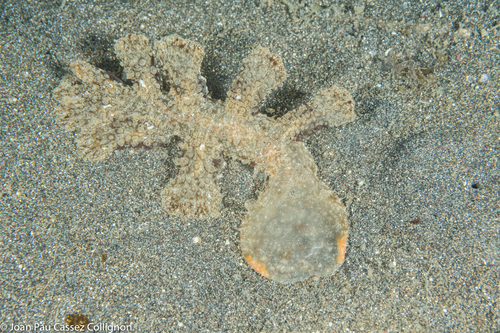
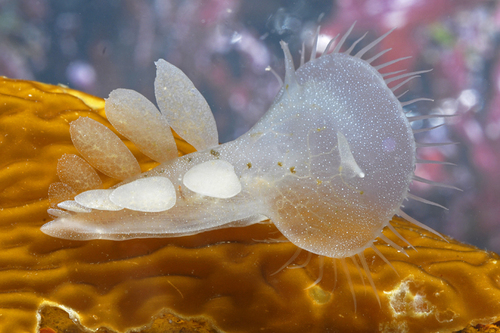
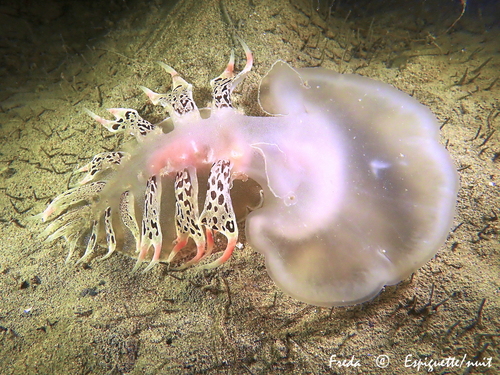
Tethys fimbria Linnaeus, 1767 can reach a maximum body length of 30 cm (12 inches). It is translucent, with dark spots present on its cerata. A broad oral hood is located on the frontal portion of its body, and its rhinophores are small. Like all members of the family Tethydidae, this species has no radula.
This species is distributed in the Mediterranean Sea, and along the east Atlantic coast from Portugal in the north to the Gulf of Guinea in the south.
It inhabits sandy or muddy-bottom seas at depths between 20 and 150 m. It feeds on small crustaceans, capturing prey with its broad oral hood. As a defense mechanism when threatened, the slug can self-amputate its cerata through autotomy. Large amounts of prostaglandins are produced within the mantle, and these prostaglandins are then transported to the cerata. Marzo et al. published a study on the biosynthesis of prostaglandins in this species in 1991.