About Terpsiphone mutata (Linnaeus, 1766)
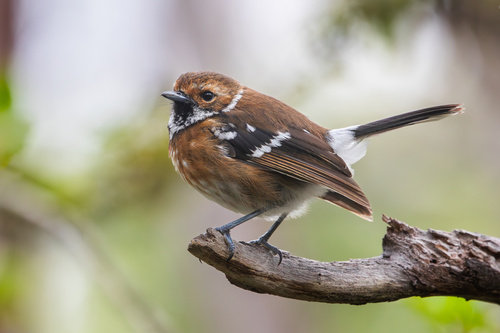
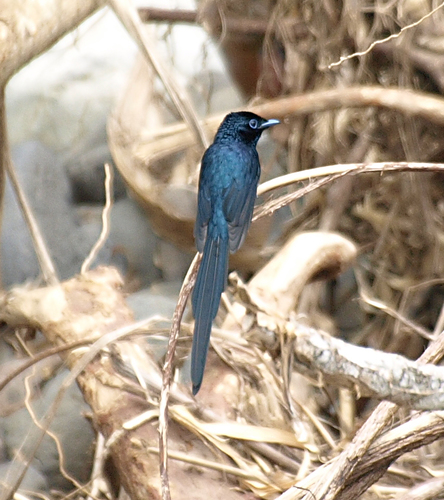
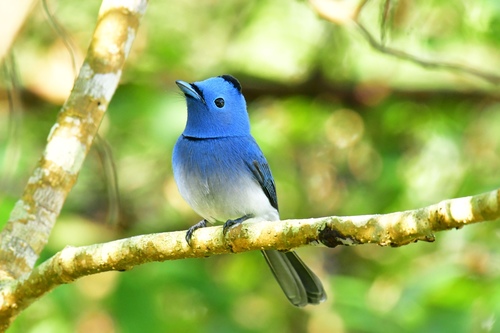
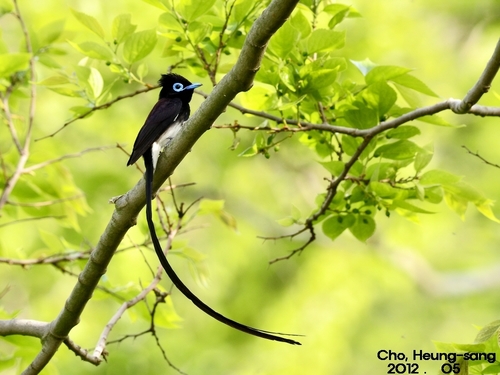
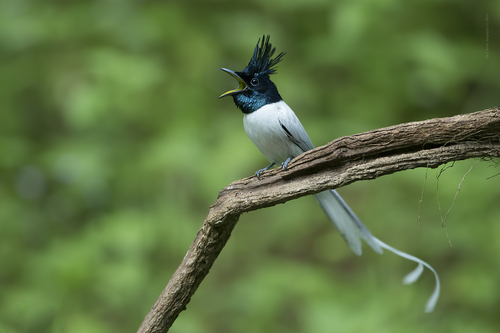
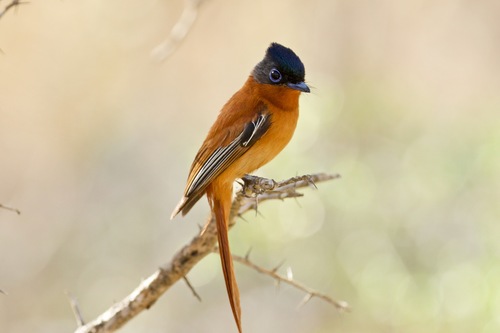
The Malagasy paradise flycatcher (Terpsiphone mutata (Linnaeus, 1766)) is a medium-sized passerine bird. It measures 18 cm (7.1 in) in length and weighs between 12.1 and 12.3 g (0.43 oz). Males have long tail plumes that can add up to an extra 18 cm (7.1 in) to their total overall length. Females are mostly rufous-orange, with a black head and nape. Their wing flight feathers are black with rufous edges, and they have a thin, light blue eyelid wattle. This species is a regional endemic, found only on Madagascar, Mayotte, and the Comoros islands. It is common across all native forest types except montane forest, and occurs at elevations from sea level up to 1,600 m (5,200 ft). It can also be found less frequently in other wooded habitats, including plantations, gardens, and secondary forest. Like all other members of its genus, the Malagasy paradise flycatcher is an insectivore that eats a wide variety of insects. It regularly joins mixed-species foraging flocks, especially flocks that contain common newtonias. It acts as a "follower" in these flocks: it lets other birds work as "beaters", follows them, and hunts any insect prey the beaters flush out. Research confirms that the foraging efficiency of Malagasy paradise flycatchers is directly correlated to the number of common newtonias in the flock: a larger number of common newtonias leads to higher foraging efficiency for the accompanying flycatchers. When rufous vangas (birds that typically forage within about one meter/yard of the ground) are present in the same mixed-species flocks as Malagasy paradise flycatchers, the flycatchers preferentially follow the rufous vangas. This leads the flycatchers to forage closer to the ground than they normally would.