About Terebralia palustris (Linnaeus, 1767)
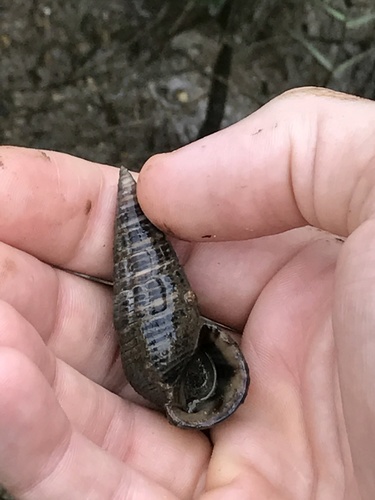
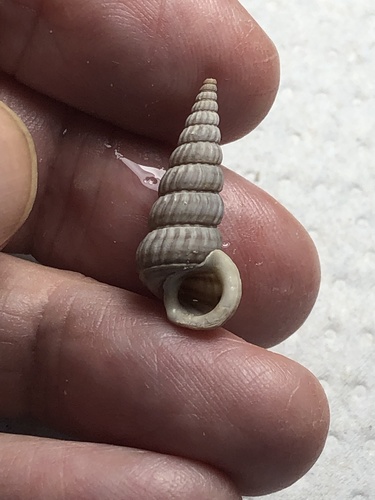
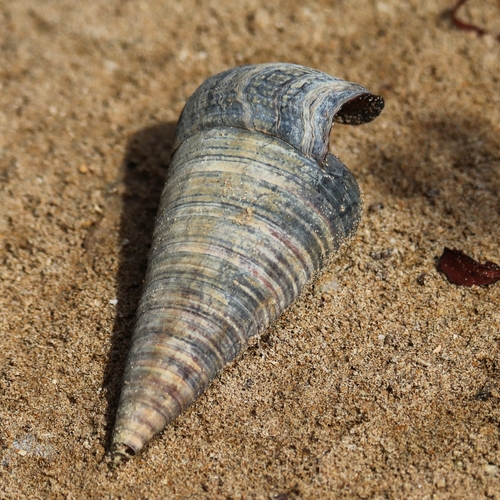
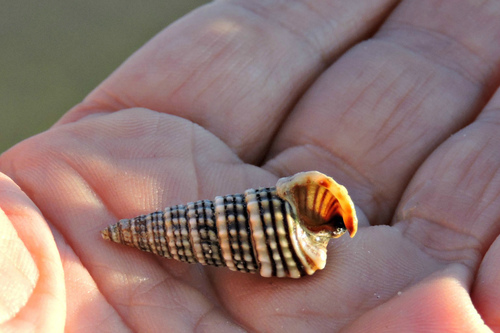
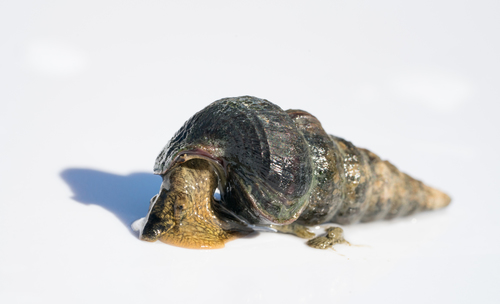
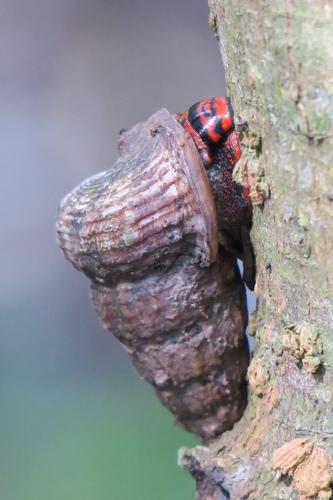
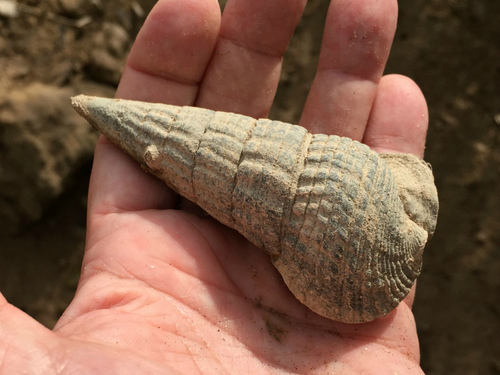
Terebralia palustris, commonly known as the giant mangrove whelk, is a species of brackish-water snail, a mollusk in the family Potamididae. This tropical species inhabits mangrove environments of the Indo-West Pacific region, and has the widest geographic distribution among potamidids, ranging from eastern Africa to northern Australia. It is the largest mangrove gastropod, with a maximum recorded shell length of 190 mm, collected from Arnhem Land, Australia.
Among all Terebralia species, this species has the widest distribution range. In the Western Pacific, its distribution extends south from the Ryukyus to the Philippines, and across Borneo, New Guinea and tropical Australia. Eastwards, T. palustris is found as far as Palau, the New Hebrides and New Caledonia. In the Indian Ocean, Terebralia palustris occurs in mangrove habitats across Indonesia, and regions of South East Asia including India and Ceylon. It has also been reported from the Andaman Islands, Nicobar, the Maldives, Mauritius, the Seychelles, the Amirantes and Madagascar. The species also occurs along the tropical and subtropical East African coastline including Kenya, Tanzania and Mozambique. Its southern global distribution limit lies along the eastern subtropical coastline of South Africa, while the northern extent of its African distribution reaches as far as the Red Sea.
Ecologically, this species lives in mud within mangrove forests, and is a predominantly mangrove-associated species.