About Tepualia stipularis (Hook.fil.) Griseb.
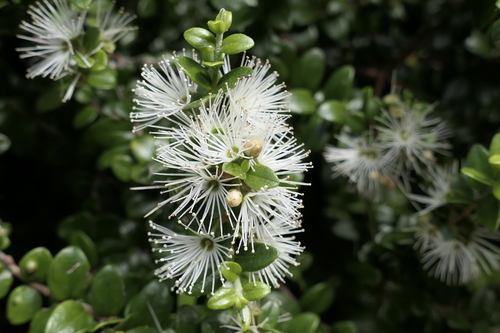
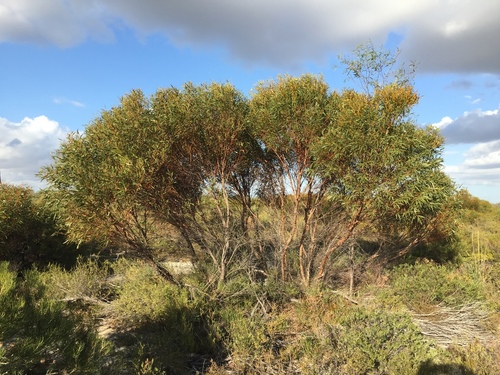
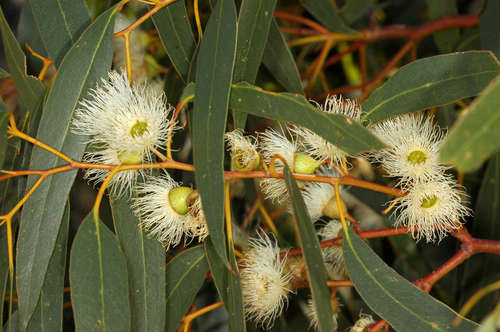
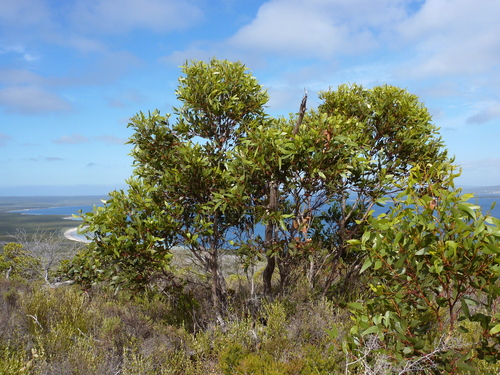
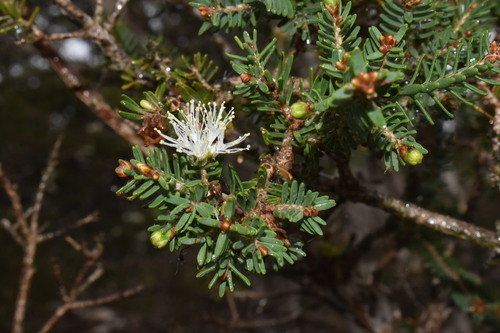
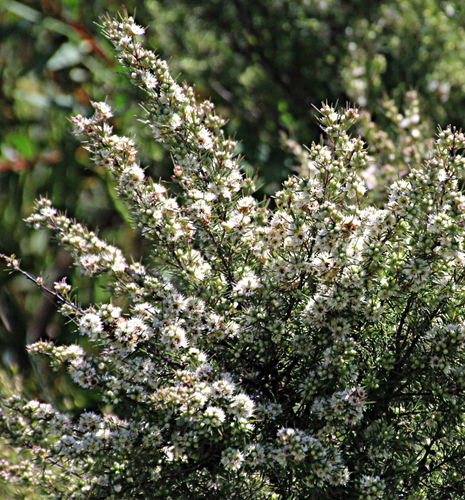
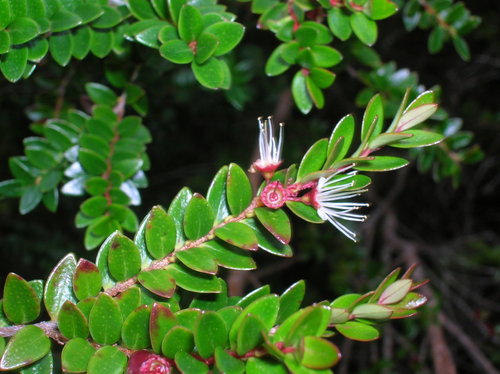
Tepualia stipularis, also called Metrosideros stipularis, is a species in the myrtle family, commonly known as tepú, trepú, or tepual. It grows as an evergreen tree or shrub that reaches heights of approximately four to five meters. This plant is native to southern South America, specifically the southern parts of Chile and Argentina. It is a typical species of very wet habitats, particularly swamps and peat bogs with gleyic soil horizons. Tepú produces white flowers that bloom during the austral summer, from December through April, with peak flowering most commonly occurring between February and March. The species is shade tolerant and grows notably slowly, adding less than 1 millimeter of growth per year. Mature tepú forests, called tepuales, have higher basal areas compared to other types of humid forests. Tepú trees tend to grow horizontally, and tepú forests generally have high biomass content. In some localities, it grows alongside Fitzroya cupressoides or Pilgerodendron uviferum. It is most abundant in the Chilean provinces of Chiloé, Llanquihue, and Palena. The wood of this tree is hard, and it is used as firewood throughout its native range due to its high energy content. It is commonly recommended to mix tepú firewood with wood from other species, because its excessively high heat content is reported to be capable of breaking kitchen stoves. This species has often been classified in its own separate genus, Tepualia, but recent taxonomic works place it within the genus Metrosideros.