About Tenthredo scrophulariae Linnaeus, 1758
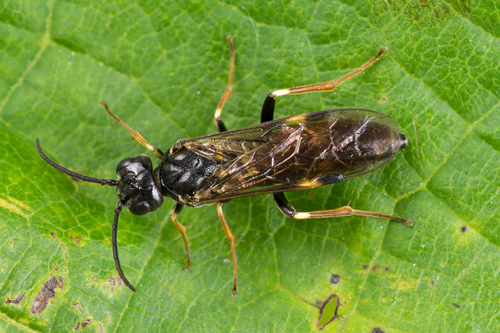
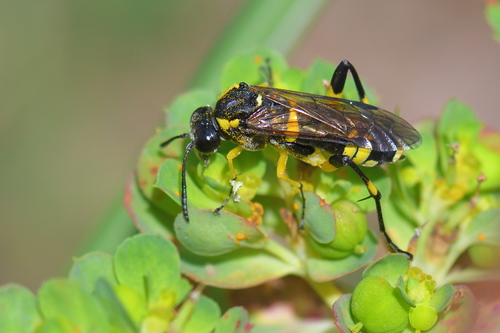
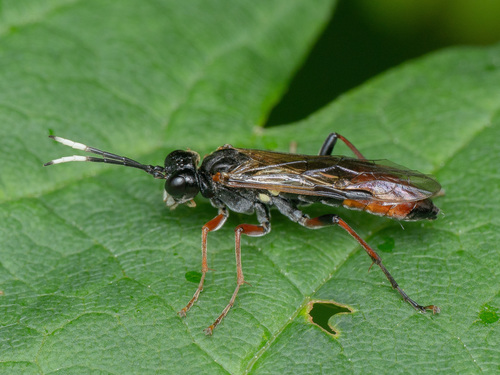
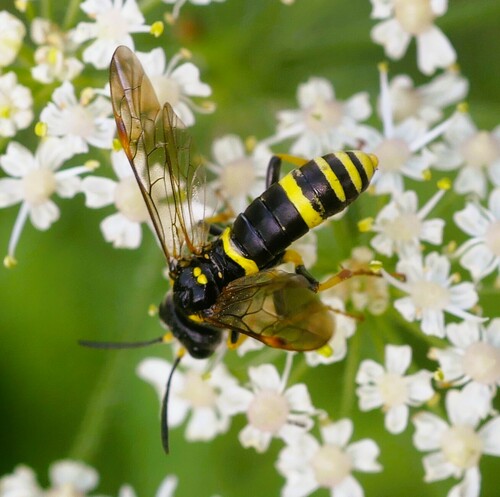
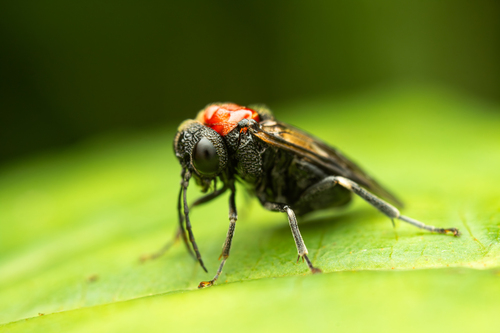
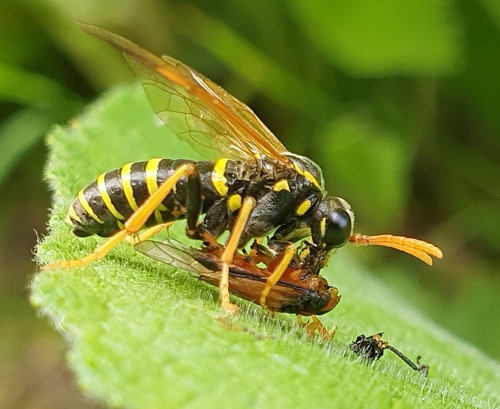
Tenthredo scrophulariae reaches an approximate body length of 11–15 millimetres (0.43–0.59 in). It has a distinct wasp-like appearance, but lacks the thin waist of a true wasp. Its head is black and fairly short, with prominent rectangular back corners. The flagellum of its antennae is not tapered at the tip, and it is quite short—less than twice as long as the width of the head, shorter than the antennae of many related species. The flagellum is orange, while the flagellum of most similar species in this genus is black. The thorax is mostly black, with only the pronotum and scutellum being yellow. The abdomen is black, marked with transverse yellow bands. The leading edge of the forewings, including the veins, is a bright orange-red; the rest of the wing membrane is transparent pale yellowish, with a gray tint toward the tip. The front legs are almost entirely yellow, but the upper sides of the femurs are black. The middle and hind legs are orange, but the femurs of the hind legs are fully black. For the middle leg pair, the femurs may be completely black or only black on their rear sides. The larvae are relatively large, reaching up to 30 millimetres (1.2 in) in length, and have 22 legs. They have a white body with black spots, and feed on figworts and mullein. This species is widespread across Europe, Turkey, and Transcaucasia, and inhabits meadows wherever figwort grows.