About Tenodera aridifolia Stoll, 1813
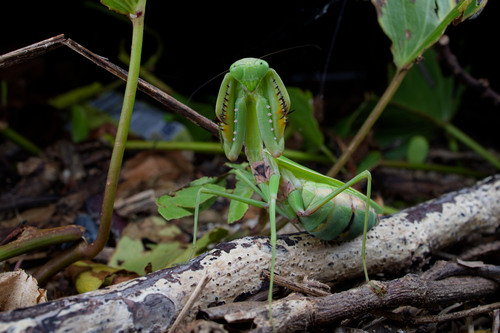
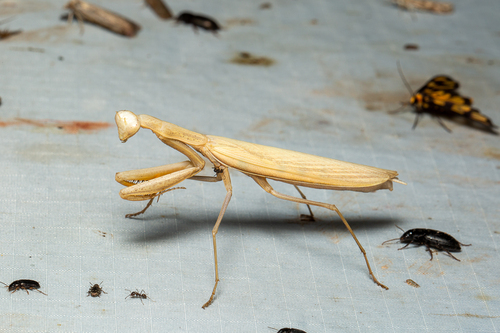
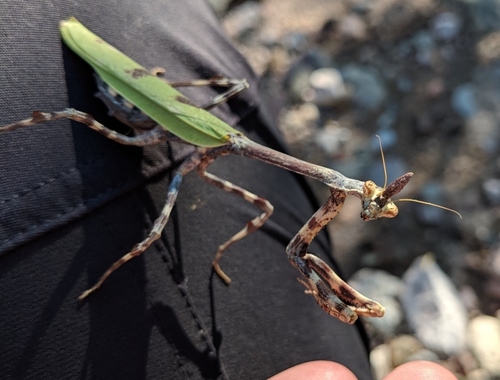
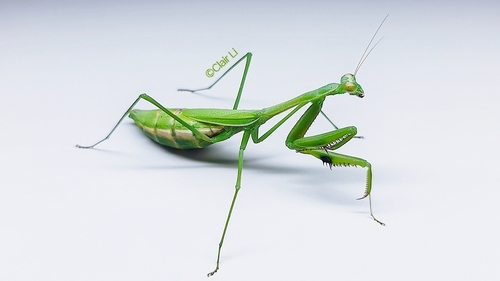
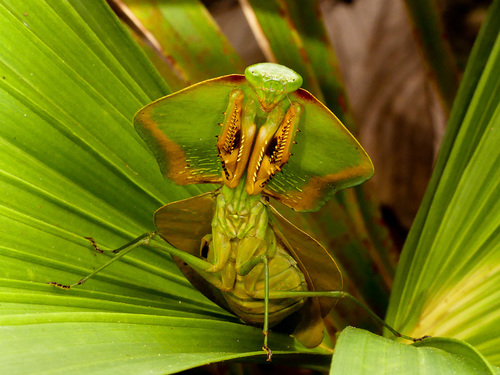
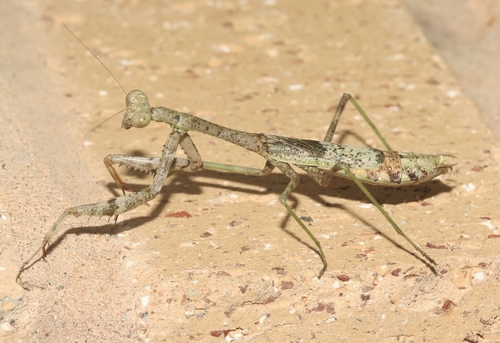
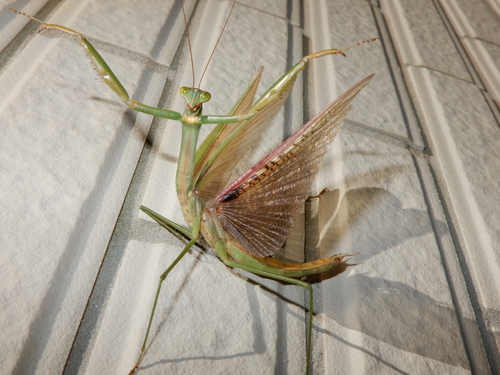
Description: Adult Tenodera aridifolia are large and slender, with long raptorial forelegs and a triangular head. Females typically measure 80–105 mm long, while males are smaller, typically measuring 65–85 mm. Their color varies with habitat, ranging from light green to brown. Distinctive identifying traits include a yellowish spot on the base of the fore-coxa, and dark brown to purplish hindwings when opened. This trait is key to distinguishing Tenodera aridifolia from T. sinensis. Distribution and habitat: T. aridifolia is one of the most widespread and abundant temperate mantis species, with a broad distribution across East Asia, including China and Taiwan. Contrary to common naming, this species is not found in Japan; it is replaced there by T. sinensis, a species that has often been confused with T. aridifolia. The Japanese giant mantis (T. aridifolia) thrives in warm, open habitats with abundant prey, including gardens, cultivated fields, forest edges, shrublands, rice fields, and areas with dense vegetation. It is common in grasslands on the mainlands of Japan. Life cycle: Like many other temperate mantids, Tenodera aridifolia is univoltine, and overwinters as eggs inside egg cases. Nymphs experience high mortality due to starvation and cannibalism. Sporadic egg hatching patterns in T. aridifolia are thought to create diversity in stage structure over the course of nymphal development, with body size differences persisting throughout the entire development period.