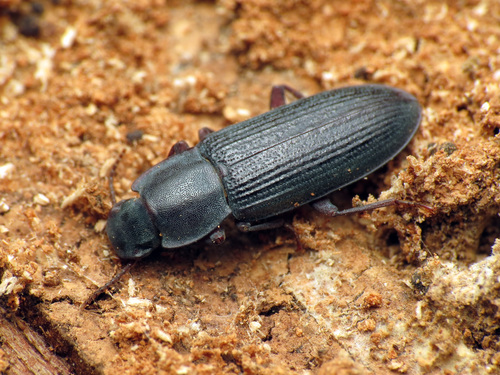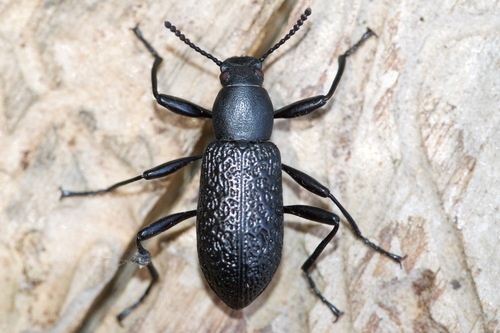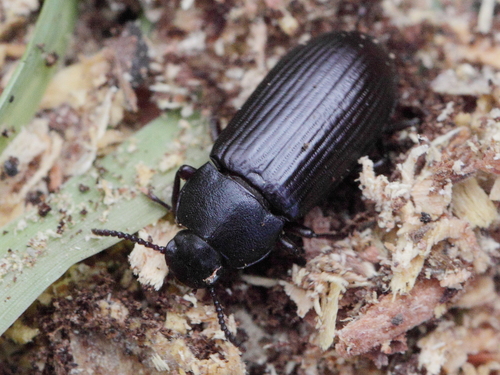
About Tenebrio molitor Linnaeus, 1758
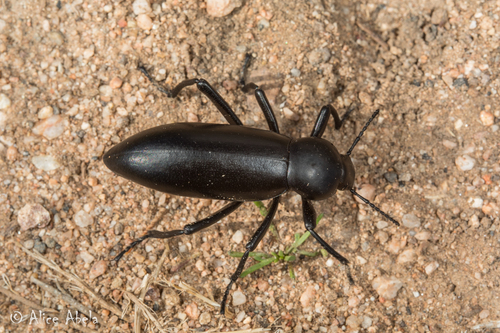
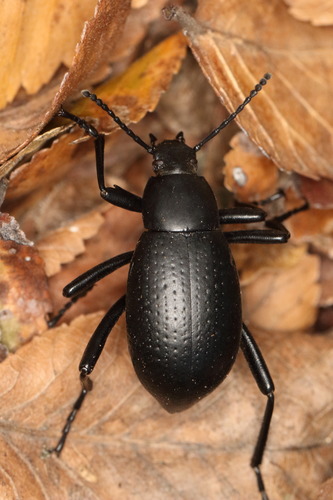
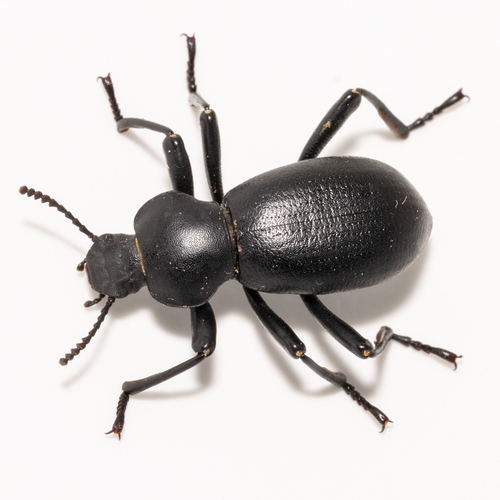
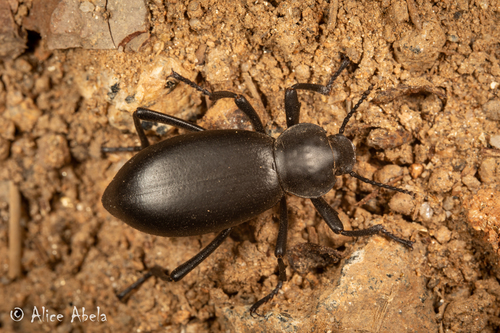
Tenebrio molitor Linnaeus, 1758, commonly known as the yellow mealworm beetle, is a holometabolic insect that progresses through four distinct life stages: egg, larva, pupa, and adult. Mature larvae typically reach at least 2.5 cm (0.98 in) in length, and may grow as long as 3.2 cm (1.25 in). Adult beetles generally measure 1.25 to 1.8 cm (0.49 to 0.71 in) in length, and may reach up to 1.9 cm (0.75 in) long; adult T. molitor are dark brown or black in color. This species can be distinguished from other similar beetles by several key traits. Evenly divided linear grooves run along the abdomen, and adult beetles have only four tarsal segments on their hind legs, while most similar-sized ground beetles have five tarsal segments. T. molitor is often confused with the closely related black mealworm beetle (T. obscurus), but the two can be told apart by size, shape, and color. Adult T. obscurus have a more rounded abdomen that ends in a pointed tip, unlike the rectangular, blunt-ended abdomen of T. molitor. T. molitor larvae are also lighter in color than T. obscurus larvae. Mealworms most likely originated in the Mediterranean region, and have spread to many areas of the world through human trade and colonization. The oldest archaeological evidence of mealworms dates to Bronze Age Turkey. Records of mealworms from the British Isles and northern Europe come from a later period, and no mealworms have been found in archaeological remains from ancient Egypt. After a female T. molitor lays eggs, they hatch between 4 and 19 days. During the larval stage, mealworms feed on vegetation and dead insects, molting between each successive larval instar. Larvae go through between 9 and 20 instars before their final molt, after which they enter the pupal stage. Newly formed pupae are whitish, and darken to brown over time. Depending on environmental conditions such as temperature, adult beetles emerge between 3 and 30 days after pupation. A sex pheromone released by male T. molitor has been identified. Inbreeding reduces the attractiveness of this male sexual pheromone signaling; females are more attracted to odors from outbred males than those from inbred males. This reduction in male signaling ability is thought to result from increased expression of homozygous deleterious recessive alleles caused by inbreeding. The mealworm beetle breeds prolifically. Males insert sperm packets using their aedeagus. Within a few days after mating, females burrow into soft ground to lay eggs. Over an adult lifespan of 6 to 12 months, an average female T. molitor lays around 500 eggs. Immune defenses against parasites and pathogens require metabolic resources, so food restriction can impair the immune function of T. molitor. For adult beetles, phenoloxidase activity drops by half during short-term food deprivation, but returns quickly to baseline levels when beetles have access to food again. After an immune challenge, T. molitor larvae can eat up to five times their usual daily food intake to compensate for caloric loss from the immune response. These immune-challenged larvae experience significant weight loss when fed diets rich in only protein or only carbohydrates, but maintain stable weights when given both protein-rich and carbohydrate-rich food. Healthy T. molitor larvae usually prefer diets with a lower protein-to-carbohydrate ratio, but shift to higher-protein food after a bacterial immune challenge. This dietary shift enhances hemocyte circulation and antibacterial activity in the hemolymph, which likely maximizes resistance to bacterial infection. Phenoloxidase activity is not affected by this change in diet choice. Research has shown that T. molitor can compensate for nutritional imbalances by selecting complementary foods, which buffers the effects of nutritional imbalance on body composition. The way they restore nutritional balance depends on which nutrient was initially deficient in their diet: beetles previously fed a protein-rich, carbohydrate-deficient diet will prefer carbohydrates over protein, while beetles fed a carbohydrate-rich, protein-deficient diet strongly prefer a protein-rich diet. Self-selecting T. molitor beetles recover from either carbohydrate or protein deficiency within six days by choosing the complementary diet. Mealworms are commonly used as pet food for captive reptiles, fish, birds, and some small mammals. They are also provided to wild birds in bird feeders, especially during the nesting season. Mealworms are valued for their high protein content, and are also used as fishing bait. They are commercially available in bulk, typically shipped in containers with bran or oatmeal as a food source. Commercial growers add juvenile hormone to the feeding process to keep mealworms in the larval stage, allowing them to reach an abnormal length of 2 cm or greater. Mealworms are edible for humans, and are processed into a range of food products sold at retail, including insect burgers. Most insect-based foods made from mealworms are currently limited to snacks and protein bars, which are not designed to replace traditional meat. Due to their high protein and fat content, plus substantial fiber, they are a nutrient-dense food source for humans. They are rich in oleic acid, which is associated with decreased low-density lipoprotein (LDL) and increased high-density lipoprotein (HDL) levels in human blood. Mealworms have been consumed by humans for centuries in many Asian countries, particularly in Southeast Asia, where they are commonly sold in food markets as street food alongside other edible insects. Baked or fried mealworms have been marketed as a healthy snack food in recent decades. However, widespread cultural disgust toward eating insects, especially in Western countries, makes it unlikely that insects will replace a large portion of meat in human diets. In May 2017, mealworms were approved for human consumption as food in Switzerland. In June 2021, dried mealworms were authorized as a novel food in the European Union, after the European Food Safety Authority concluded the larvae are safe for human consumption. Mealworm larvae have high nutrient content. Per 100 grams of raw mealworm larvae, there are 206 kilocalories and between 14 and 25 grams of protein. The levels of potassium, copper, sodium, selenium, iron, and zinc in mealworm larvae rival those found in beef. Mealworms also contain essential linoleic acids. By weight, they have a greater vitamin content than beef, with the exception of vitamin B12. Mealworms can be easily reared on fresh oats, wheat bran, or grain, with sliced potato, carrots, or apple added as a moisture source. The small amount of space needed to raise mealworms makes scalable industrialized mass production feasible. However, mealworm farming for food has notable industrial challenges: for example, the extremely high fat content of T. molitor larvae can cause machinery clogging in large-scale operations such as those run by Ynsect.