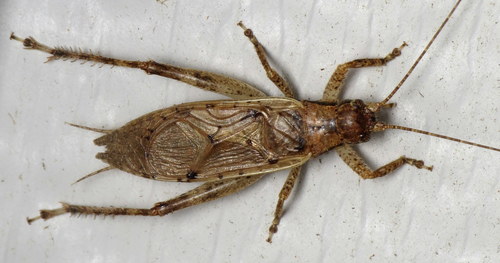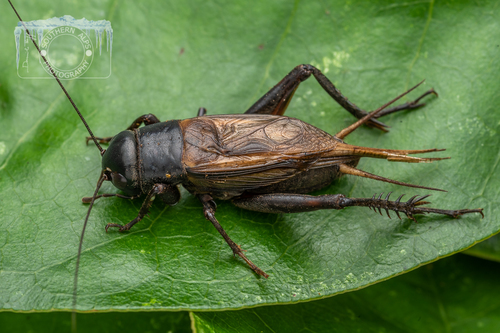
About Teleogryllus commodus (Walker, 1869)
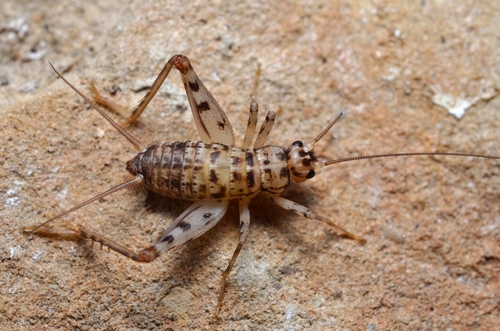
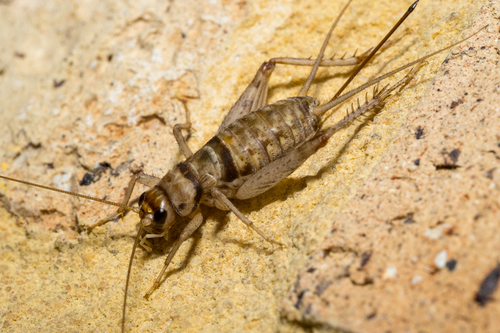
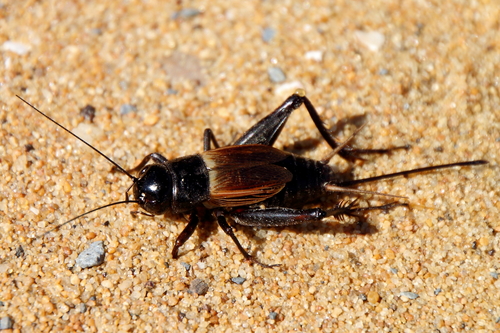
Teleogryllus commodus, commonly known as the black field cricket, can grow up to 30 mm long, with long antennae and legs adapted for jumping. Their coloration is most often black or brown. Nymphs can be identified by a white stripe on the abdomen. Adult females have a long, egg-laying structure called an ovipositor. In contrast, males have modified veins with hard pegs on their forewings, which they use to produce mating calls. The leathery forewings, called tegmina, of this species are asymmetrical. T. commodus undergoes hemimetabolous development, which means it has no pupal stage between the larval and adult life stages. It has three main life stages: egg, nymph (which includes around 8 sequential sub-stages), and adulthood. Females of this species age faster than males. Virgin males have a shorter average life expectancy than mated males, a pattern most likely caused by the high energy cost of the calling effort males use to attract mates. Even high quality males can die sooner than expected if they call very intensely. T. commodus is found across Australia and New Zealand. The species originated in Australia, and was later introduced to New Zealand. It is known to cause significant damage to pastures and gardens. Its preferred habitat includes rocky surfaces or ground with numerous cracks, which provide shelter from the sun. The species is most active at night. T. commodus lives in clusters and prefers to occupy shelter that is already inhabited by other individuals. Adult males typically change burrows every two days, a behavior driven by either scarce mates or frequent attacks from other males. Males attract females to their burrows by producing advertisement calls. If a female is interested, she will mount the male, so song production is a key factor that determines a male’s fitness. After a female chooses a mate, the pair will mate multiple times to increase the male’s probability of paternity. Successful mating triggers a sequence of processes: oogenesis (egg production), ovulation (release of the egg into the oviduct), fertilization, and finally oviposition (deposition of eggs using the ovipositor). After being laid, eggs need to absorb water to complete development. The duration of water absorption depends on environmental temperature; water absorption happens faster at higher temperatures. As eggs absorb water, the size of the egg shell increases, which improves the chance that the offspring will successfully hatch.