About Tegillarca granosa (Linnaeus, 1758)
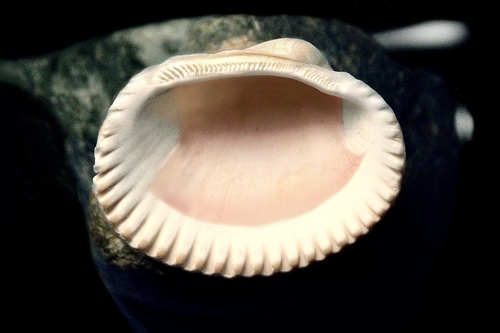
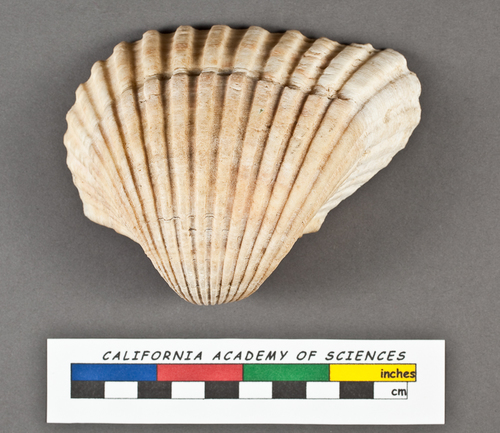
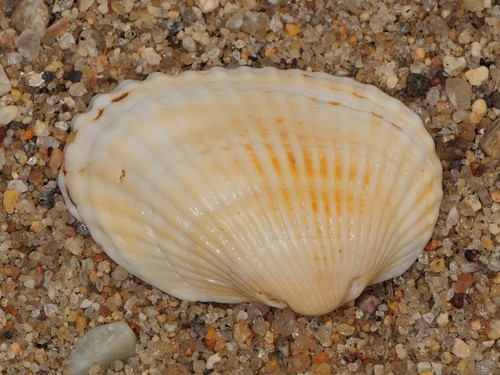
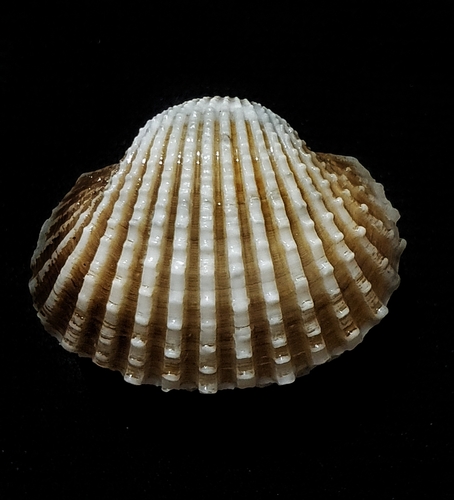
Tegillarca granosa (Linnaeus, 1758), also known by the synonym Anadara granosa, is a species of ark clam. It is commonly called the blood cockle or blood clam, a name that comes from the red haemoglobin liquid found inside its soft tissues. This species is distributed across the entire Indo-Pacific region, ranging from the eastern coast of South Africa northward and eastward through Southeast Asia, Australia, and Polynesia, and reaching as far north as northern Japan. It primarily lives in the intertidal zone at water depths of one to two metres, where it burrows into sand or mud. Adults typically reach about 5 to 6 cm in length and 4 to 5 cm in width. As an edible bivalve, its meat is served prepared by steaming, boiling, roasting, or traditionally eaten raw. This species falls under the following taxonomic classification: Domain Eukaryota, Kingdom Animalia, Phylum Mollusca, Class Bivalvia. Some harvested blood cockles may not go through the depuration purification process. As a result, certain preparation methods, such as the poaching commonly used for this shellfish in Shanghai, can leave significant amounts of harmful pathogens present in the finished product. Blood cockles are widely consumed in coastal areas of China, especially in the Yangtze River region. In Korea, this species is called kkomak (꼬막); it is cooked and seasoned with soy sauce, chili powder, and sesame oil. In Indonesia, blood cockles are known locally as kerang darah, and are a quite popular food served in many different preparations, including boiled, deep fried, or sauteed dishes. In Thailand, the species is called hoi kraeng (Thai: หอยแครง), a name that is thought to be derived from the common Indonesian name for the clam. In Thai cuisine, blood cockles are usually boiled and eaten with a spicy and sour dipping sauce, similar to how other types of seafood are served.