About Tecomanthe speciosa W.R.B.Oliv.
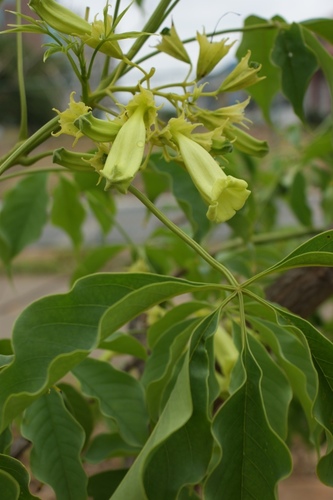
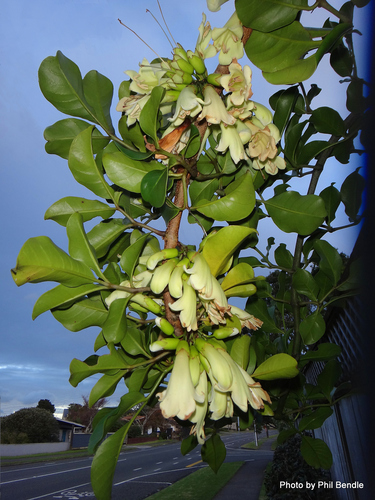
Tecomanthe speciosa W.R.B.Oliv. is a vigorous twining climber that can reach up to 10 m (33 ft) in height. Its foliage consists of glossy, thick compound leaves that can have up to five leaflets each. In autumn or early winter, this species produces large clusters of long, cream-coloured tubular flowers that grow directly from the plant's stem. These flowers have traits that appear to be adapted for pollination by bats, even though bats are not part of the current native fauna of the Three Kings Islands, though they may have occurred there in the past. Despite this, cultivated plants of Tecomanthe speciosa are readily pollinated by many different native and non-native birds. Although it is considered a subtropical plant, Tecomanthe speciosa can survive temperatures as low as −2 °C, and cultivated specimens have been recorded surviving as far south as Dunedin in New Zealand. It has not yet been formally assessed for the IUCN Red List, but a preliminary assessment of the conservation status of all New Zealand vascular plants classified T. speciosa as "Nationally Critical". Tecomanthe speciosa may once have been widespread across the Three Kings Islands. By the time it was first discovered, introduced goats had reduced the entire wild population to just one individual growing on Great Island, making it one of the most endangered plant species in the world. The single remaining wild individual grew on a cliff too steep for goats to access. This original wild specimen still grows in its natural habitat, and has produced additional new vines through natural layering in the years since its discovery. While the original plant was protected from destruction after goats were eradicated from the island, rapid regeneration of the surrounding forest has reduced the amount of sunlight that reaches the plant. The original plant was last recorded flowering fully in 1946, and did not flower at all for the rest of the 20th century. Limited light flowering was recorded in the early 21st century. After the single wild plant was discovered in 1945, cuttings were collected from the original specimen. After ten years, plants grown from these cuttings by horticulturists finally produced seed, and Tecomanthe speciosa has since become popular in New Zealand gardens as a vigorous climber with a tropical appearance. This plant needs warm growing conditions, and is very sensitive to frost; it suffers damage if temperatures drop below −2 °C. It can be easily propagated from cuttings, layering, and seed. Seed must be sown fresh, and should germinate within two weeks. Seedlings grow vigorously, and may flower within two to three years. Plants grown from cuttings may take five years or longer to produce their first flowers.