About Technomyrmex albipes (Smith, 1861)
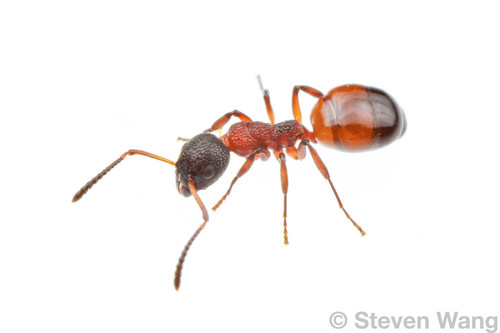
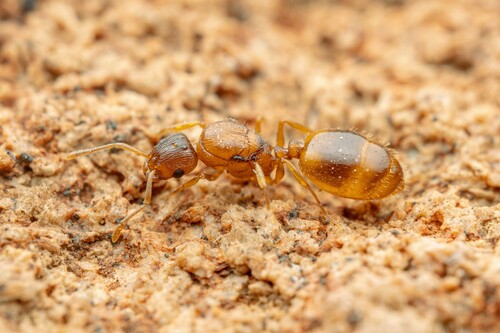
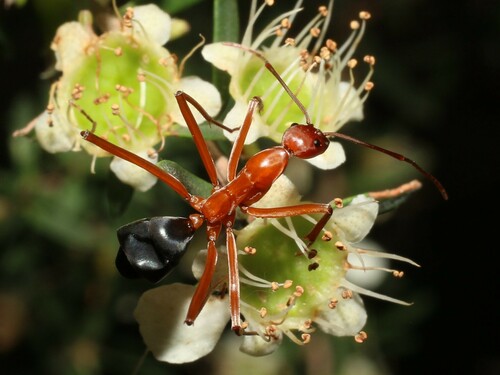
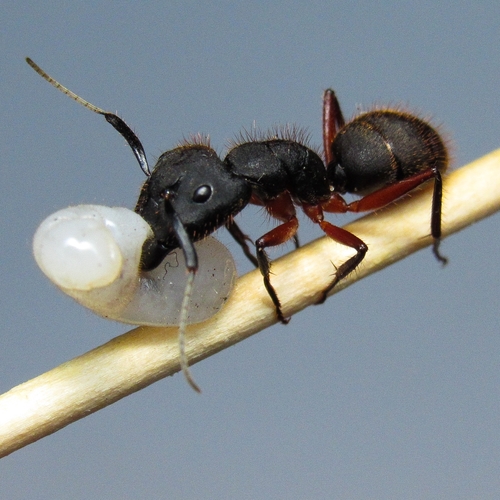
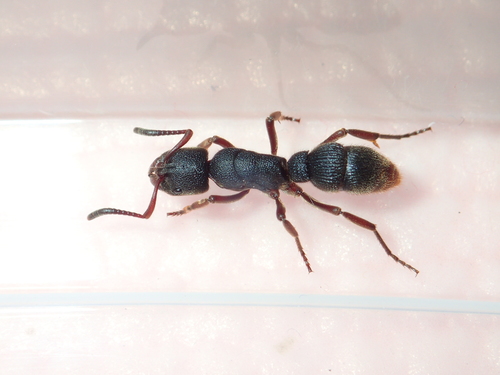
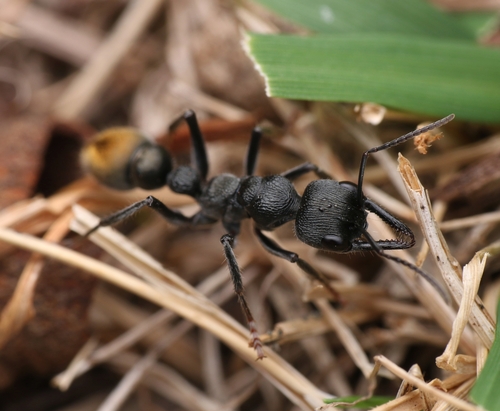
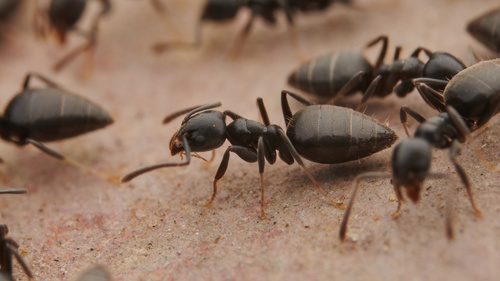
Technomyrmex albipes, commonly called the white-footed ant, is a small ant that measures 2 to 4 mm (0.08 to 0.16 in) in length. Its body is mostly black, with pale coloring on the lower portions of its legs. Worker individuals have a chocolate-black body, pale lower limbs, 12-segmented antennae, and a flattened petiolar node. It can be distinguished from the closely related Technomyrmex difficilis by the absence of a pair of bristle-like setae on the back of its head, which T. difficilis does possess. This species is native to the Indo-Pacific region, and has been introduced to Australia, Africa, North America, the Caribbean, and parts of Asia. It typically lives in dry forests and open areas. It builds tent-like nests from debris in trees, bushes, and rotten logs, under rocks, within leaf litter, and other similar sites. It also readily nests in human-made structures, including wall cavities and attics. The white-footed ant forages over a wide area, often entering houses and scavenging for food in kitchens and other interior rooms, which means it is considered a pest. It is largely arboreal and feeds on honeydew produced by sap-sucking insects including aphids, mealybugs, and scale insects. To maintain access to this honeydew, T. albipes protects these insects from predators. This activity benefits the sap-sucking insects, many of which are agricultural pests. For example, the mealybug Dysmicoccus brevipes, which transmits pineapple wilt disease in Sri Lanka, is protected by the ant, making biological control of the mealybug difficult. Similarly, in South Africa, the ant contributes to outbreaks of the red scale insect Aonidiella aurantii, which is a major citrus pest in the country.