About Taxodium mucronatum Ten.
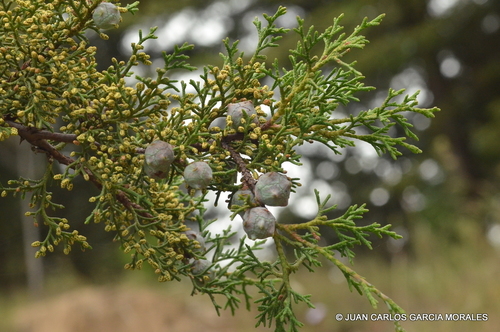
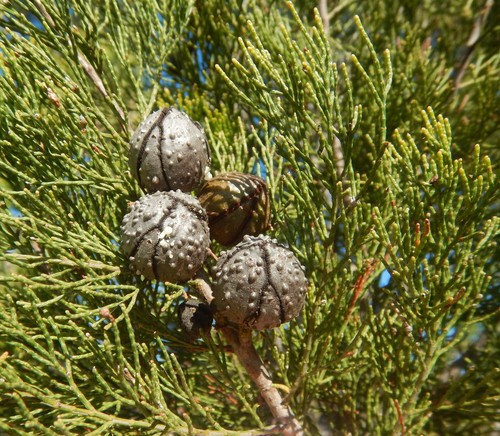
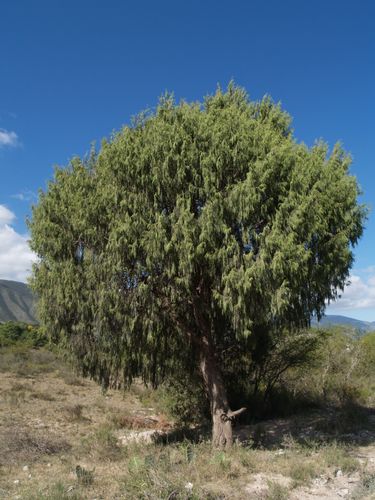
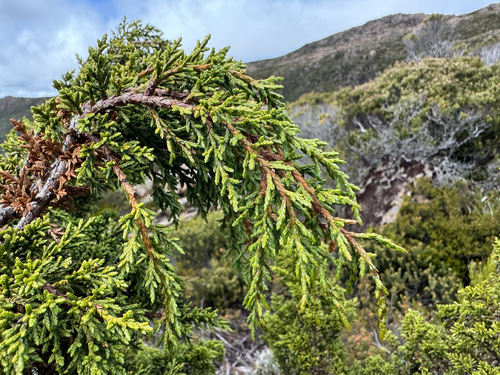
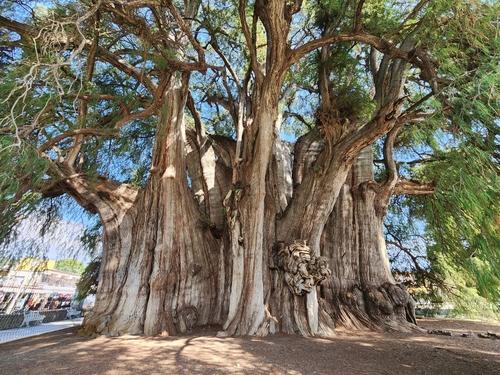
Taxodium mucronatum Ten., commonly known as Montezuma cypress or ahuehuete, is a large evergreen or semi-evergreen tree. It typically grows 40 m (130 ft) tall, with a trunk 1–3 m (3.3–9.8 ft) in diameter, though specimens can reach much larger sizes. Trees growing in the Mexican highlands are notably exceptionally stout. One famous specimen, the Árbol del Tule in Santa María del Tule, Oaxaca, Mexico, has a trunk diameter of 11.42 m (37.5 ft), making it the stoutest tree in the world. Several other known specimens have trunk diameters between 3–6 m (9.8–19.7 ft). For comparison, the second stoutest tree in the world is the Big Baobab, an African baobab. Its leaves are spirally arranged, but twisted at the base to lie in two horizontal ranks. Each leaf measures 1–2 cm (0.39–0.79 in) long and 1–2 mm (0.039–0.079 in) broad. Its cones are ovoid, and measure 1.5–2.5 cm (0.59–0.98 in) long and 1–2 cm (0.39–0.79 in) broad. Unlike the related bald cypress and pond cypress, Montezuma cypress only rarely develops cypress knees from its roots. This species is native to much of Mexico, ranging as far south as the highlands of southern Mexico. Within Guatemala, it is restricted to Huehuetenango Department. There are two disjunct populations of the species in the United States: one in the Rio Grande Valley of the southernmost Texas, and another in southern New Mexico, near Las Cruces. It is primarily a riparian tree that grows along upland riversides, but can also be found growing next to springs and marshes. It occurs at altitudes between 300 and 2,500 m (980 to 8,200 ft); in Mexico, it is mostly found in highlands between 1,600–2,300 m (5,200–7,500 ft) in altitude. Taxodium mucronatum is very drought tolerant and fast growing, and favors climates that receive rain throughout the year, or at least have high summer rainfall. Montezuma cypresses have been used as ornamental trees since Pre-Columbian times. The Aztecs planted āhuēhuētl along processional paths in the gardens of Chapultepec, due to its association with government. Artificial islands called chinampas were created in the shallow lakes of the Valley of Mexico by adding soil to rectangular areas enclosed by trees such as āhuēhuētl; these trees also lined the region's canals before the Spanish conquest. Ahuehuetes are still frequently cultivated in Mexican parks and gardens today. The wood of this tree is used to make house beams and furniture. Historically, the Aztecs used its resin to treat gout, ulcers, skin diseases, wounds, and toothaches. A decoction made from the bark was used as a diuretic and an emmenagogue. Pitch derived from the wood was used as a cure for bronchitis. The leaves acted as a relaxant and could help reduce itching. In some parts of Mexico, the foliage is used to decorate church altars during religious ceremonies. Bonsai master John Naka donated his very first bonsai, a Montezuma cypress, to the United States National Bonsai and Penjing Museum. A linear grove of Montezuma cypresses has been growing successfully in the main courtyard of the Getty Center Art Museum since 1995.