About Tawera spissa (Deshayes, 1835)
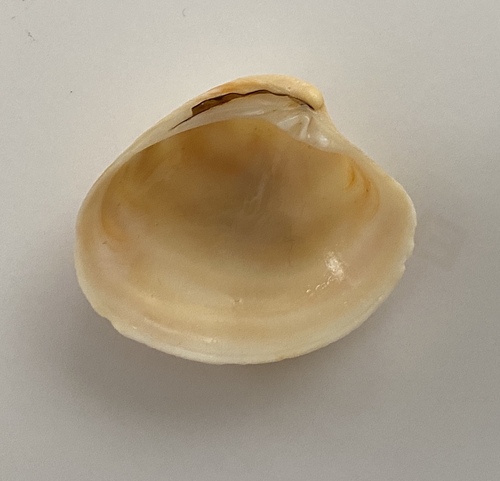
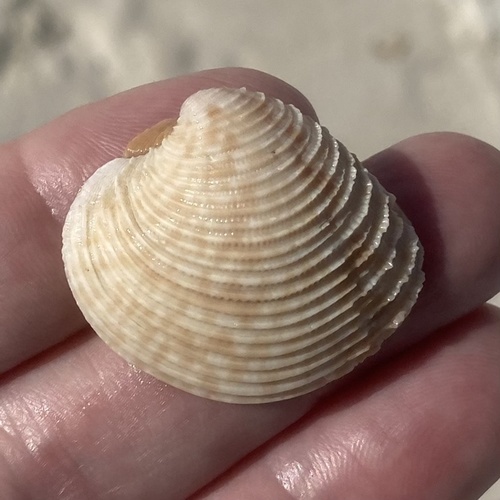
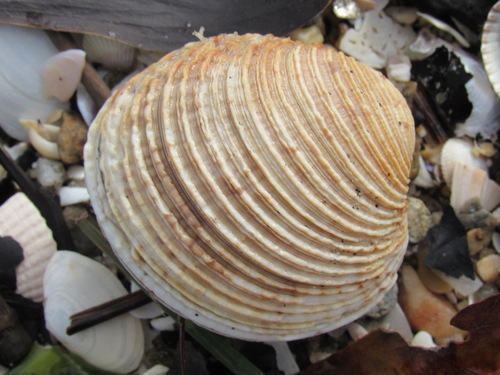
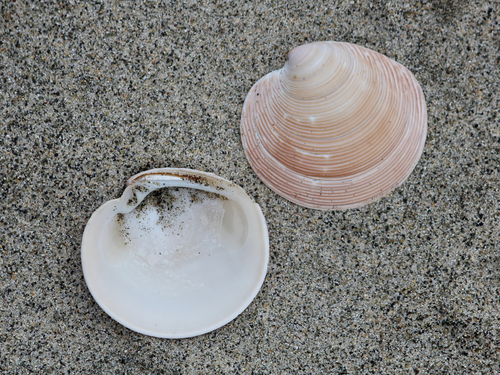
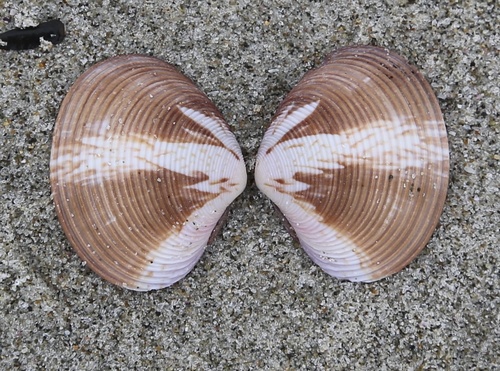
Tawera spissa (Deshayes, 1835) is an organism that reaches 20 to 25 mm in length, with a triangular shape and oblong valves. Each of its valves has rows of ridges. The external surface of the valves is most often white, with a range of different brown patterns, but it may also be fully white or fully brown. The internal surface of the valves is white, marked with brown adductor scars. Individuals of this species live just below the substrate surface, in substrates ranging from fine to coarse sand and light gravel. They typically occur at depths from just below the low tide mark down to 200 meters, and are generally found in locations with some water movement. In southern New Zealand, Tawera spissa can be the dominant species in subtidal benthic zones. It shares this dominant status with Purpurocardia purpurata in widespread open coastal communities, and with Zemysina globus in more sheltered environments such as bays.