About Tautoga onitis (Linnaeus, 1758)
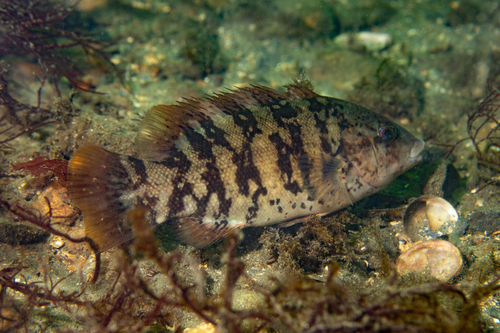
Tautoga onitis, commonly called tautog, have brown and dark olive bodies marked with white blotches, and are plump and elongated in shape. Adults typically weigh between 0.5 kg and 1.5 kg (1 to 3 lb). The species reaches a maximum length of 90 cm (3 ft) and a maximum weight of 13.1 kg (28 lb 14 oz). Tautog have many adaptations for living in and around rocky areas. They have thick rubbery lips, powerful jaws, and a set of molar-like teeth at the back of their throats. This combination of traits lets them pick and crush prey such as mollusks and crustaceans. Their skin has a rubbery texture and is covered in a thick layer of slime, which protects the fish when they swim among rocks. Spawning for tautog takes place offshore from late spring to early summer. Eggs hatch and develop as they drift in open water. All juvenile tautog settle in shallow, protected waters, where they live and hide in seaweed, sea lettuce, or eelgrass beds for protection. Young tautog are green in color to camouflage themselves. In late fall, juveniles move offshore, where they spend the winter in a state of reduced activity.