About Tauraco porphyreolophus (Vigors, 1831)
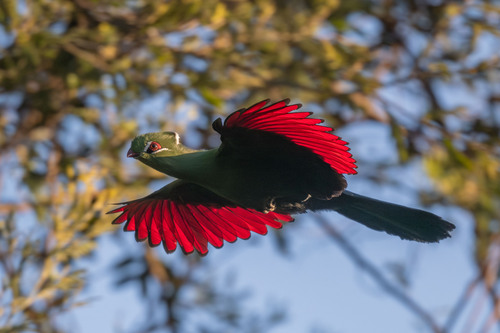
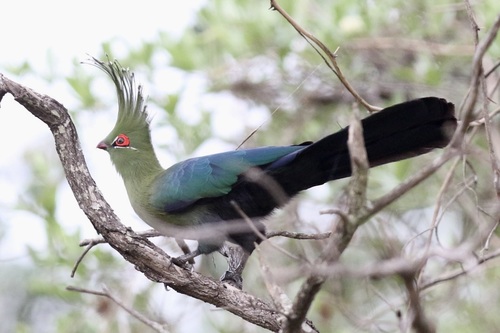
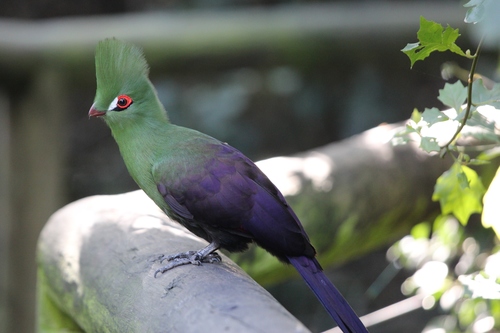
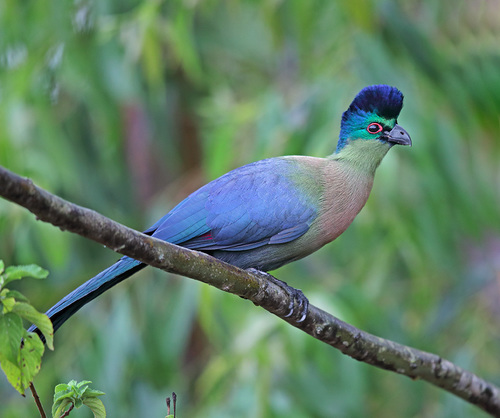
This bird species, commonly called the purple-crested turaco, has a purple crest above a green head, a red ring surrounding its eyes, and a black bill. Its neck and chest are a mix of green and brown, while the rest of its body is purple, with red flight feathers. Purple-crested turacos are large frugivores, meaning they feed primarily on fruit. They are known to carry cycad seeds from various plant species over long distances between feeding locations and their nesting sites. After consuming fruit, they regurgitate seeds whole, leaving the seeds in areas where they can germinate. Like many other large frugivores, the purple-crested turaco primarily eats whole fruits, and large frugivores are thought to be necessary for effective ecosystem functioning. Among similar turaco species, purple-crested turacos have faster minimum food transit times when eating diets with smaller seeds compared to diets with larger seeds. When fed only pulp from fruits, this species has a significantly faster pulp transit time than a closely related turaco species, regardless of whether the pulp comes from larger-seeded or smaller-seeded fruits. Purple-crested turacos are primarily frugivorous, and the seeds they disperse germinate at similar rates to manually depulped seeds. Turacos as a group are important for seed dispersal and germination, and the purple-crested turaco's digestion process still allows high germination rates and low seed retention even for seeds of invasive plants. In contrast, the invasive rose-ringed parakeet (Psittacula krameri) holds seeds for longer periods of time and produces lower germination rates for alien plant seeds. This species lives in moist woodland and evergreen forests. Its range covers Burundi, Kenya, Malawi, Mozambique, Rwanda, South Africa, Eswatini, Tanzania, Uganda, Zambia, and Zimbabwe. The southernmost point of its range is at the Mtamvuna River on the border between KwaZulu-Natal and Eastern Cape.