About Tarentola mauritanica (Linnaeus, 1758)
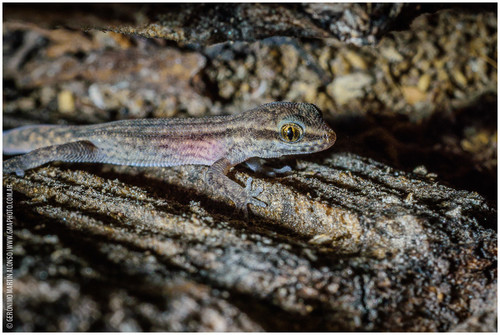
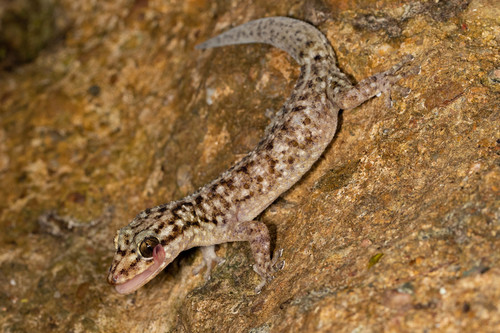
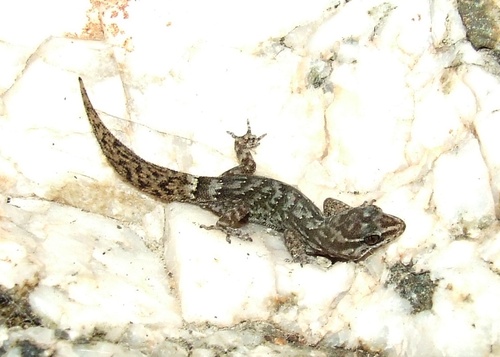
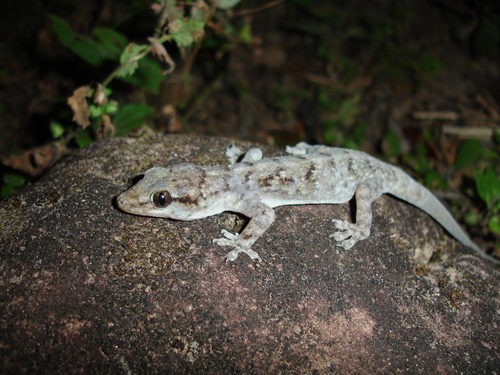
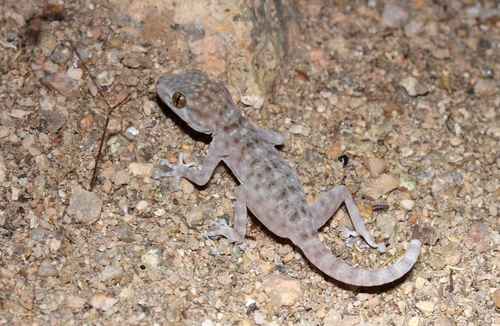
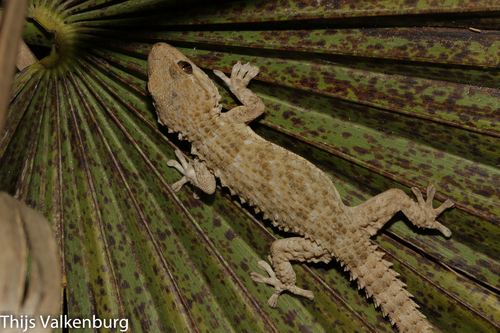
Adults of this species can reach a total length of up to 15 cm (6 inches), including the tail. They have a robust body and a flat head. Prominent conical tubercles cover the back, legs, and tail; regenerated tails are smoother and lack these tubercles. The mouth is obtuse, and the large eyes have no eyelids with a vertical pupil. The fingers have large lateral outgrowths, and the underside of the fingers bears undivided adhesive laminae. Only the third and fourth fingers have united tips. The base color is brownish grey or brown, marked with darker or lighter spots. The intensity of these colors changes with light levels: when active during the day, individuals are darker in color than they are at night. This species can be found in a wide range of habitats including many construction sites, ruins, rocky areas, and tree trunks. In Europe, its distribution covers most of the Iberian Peninsula (excluding northwestern Portugal and most of northern Spain), southern France, coastal Italy, southern Slovenia, northern coastal Croatia, and southwestern parts of Greece. In North Africa, it ranges from northern Egypt, through northern Libya, northern and central Tunisia, and northern Algeria, to most of Morocco. An isolated introduced population exists in southern Western Sahara. This species can live at altitudes of up to 2,300 metres (7,500 ft).