About Tarentola chazaliae (Mocquard, 1895)
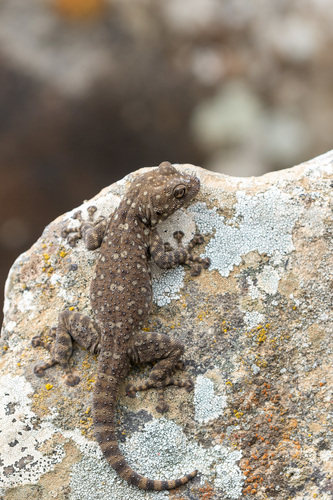
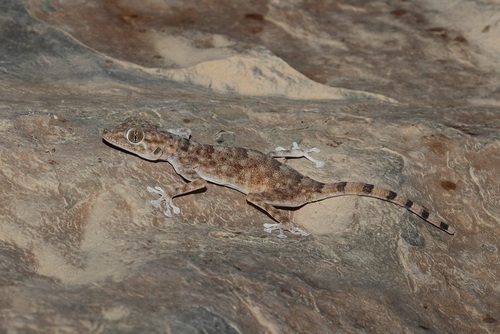
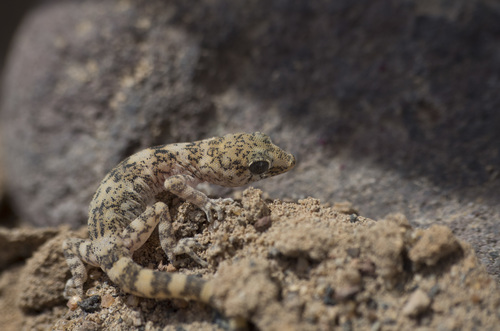
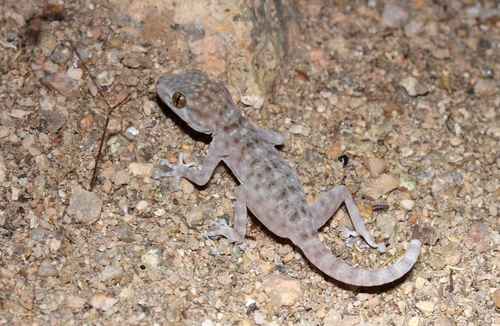
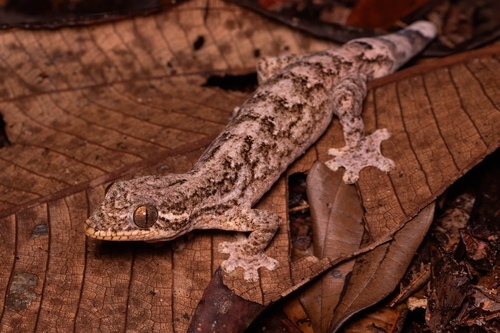
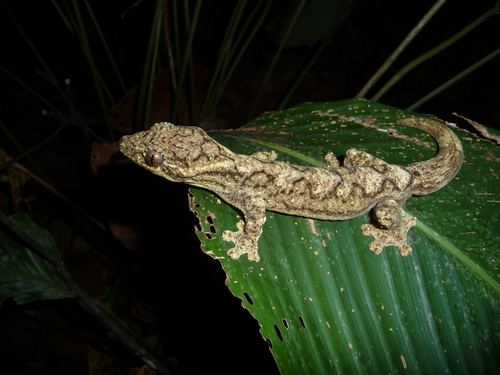
This species is scientifically named Tarentola chazaliae (Mocquard, 1895), commonly called the helmethead gecko. Adult helmethead geckos reach a snout-to-vent length (SVL) of 7.5 cm (3.0 in), with a total body length of approximately 11 cm (4.3 in). Their head is covered in small granules, and the enlarged tubercles on the back of the head form a casque structure. The gecko's digits are flattened and shaped like spatulas. Dorsally, individuals range in color from light grey to dark brown, and can be uniformly colored or marked with pale or dark blotches; their underside is light in color. Ecologically, Tarentola chazaliae is primarily nocturnal. Most diurnal lizards have lost the retinal rod structures typical of vertebrates, retaining only cones for vision, but this gecko has further adapted its eyes to maintain some degree of color vision in low nighttime light. It has evolved a multifocal optical system that allows it to distinguish between light of different wavelengths. The gecko's pupils are circular at night, but contract into a pair of pinhole-sized pupils per eye during the day. The exact function of this pupil shape change is not confirmed, but it has been hypothesized that the pinhole form makes the gecko less visible to potential predators while it basks in sunlight. Helmethead geckos are the first vertebrates confirmed to be capable of color vision in very low light conditions, and their acute nighttime color vision is 350 times more sensitive than that of humans.