About Tanna japonensis (Distant, 1892)
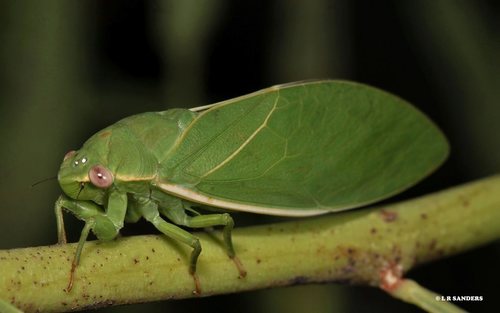
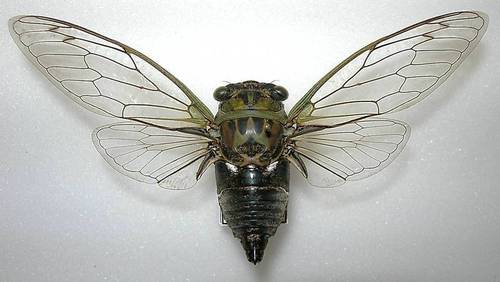
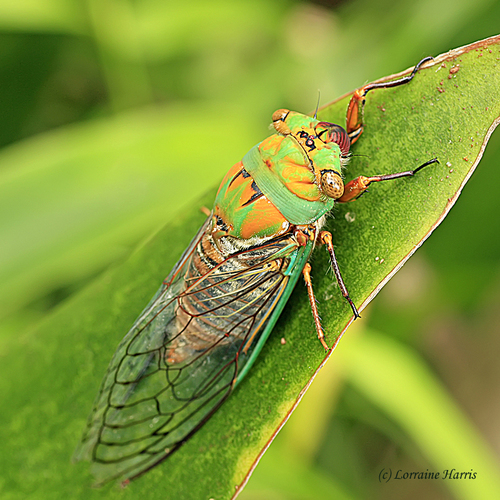
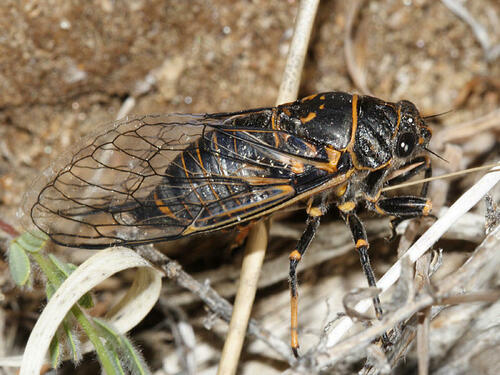
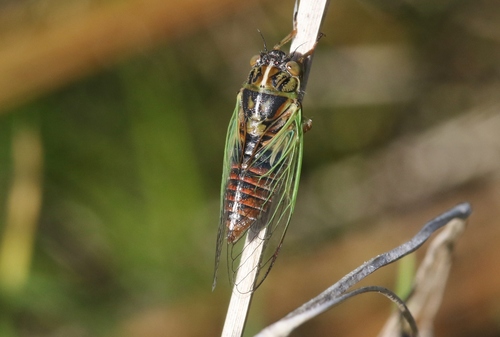
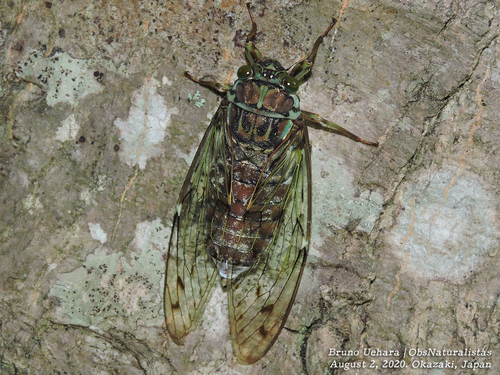
The species described here is Tanna japonensis (Distant, 1892). Adult males measure 28–38 mm (1.1–1.5 in) in body length, while adult females are 21–25 mm (0.8–1.0 in) long. Males have longer, thicker abdomens than females, which makes the two sexes easy to tell apart. Males also have a more developed intra-abdominal cavity, which produces a more resonant calling sound. The body of Tanna japonensis is primarily reddish-brown, with green markings around the compound eyes, and across the center and back of the thorax. Specimens that live in mountain habitats tend to be darker in overall coloration. In Japan, the range of Tanna japonensis extends from temperate Hokkaido in the far north, south to subtropical Amami Ōshima, which lies near Taiwan. Several variants and subspecies, such as T. j. ishigakiana, are recognized within this range. Tanna japonensis occupies a wide variety of habitats, including cypress, cedar, and hardwood forests. It can be found from mountainous regions of Hokkaido to the plains of northern Kyūshū, and in southern Kyushu, it occurs at slightly higher mountain elevations. In ecological interactions, the parasitic moth Epipomponia nawai lays its eggs on Tanna japonensis, using the cicada as a host. Tanna japonensis is also preyed on and attacked by flesh flies.