About Tamias sonomae (Grinnell, 1915)
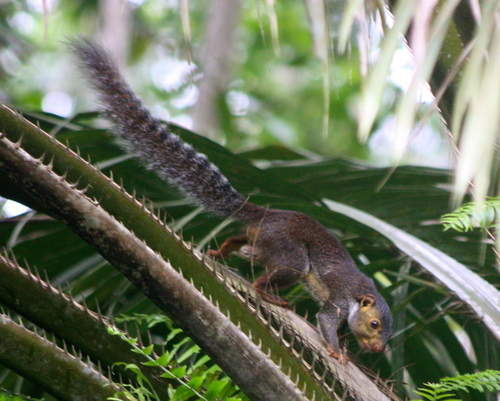
The Sonoma chipmunk, currently referred to as Neotamias sonomae (originally published as Tamias sonomae Grinnell, 1915), is a rodent species in the squirrel family Sciuridae. It is endemic to northwestern California in the United States, occurring only in areas of California north of the San Francisco Bay, with most of its range within Sonoma and Marin counties. Members of the genus Neotamias are characterized by having two premolars, and this species has two recognized subspecies: N. s. alleni and N. s. sonomae. Sonoma chipmunks live in forest or chaparral habitats. The forests they inhabit include those of sticky laurel, Ponderosa pine, Douglas fir, spruce, redwood, and black oak, and they are most frequently associated with coniferous forests. The chaparral they occupy consists mainly of sagebrush plains. They are found at elevations ranging from 0 to 1800 m. They typically live on the ground and dig ground burrows, but they are capable of climbing and may build nests in trees.
Sonoma chipmunks breed once per year between February and July, with most breeding occurring in April and May. Females will occasionally have a second breeding season if they lose their first litter. Gestation lasts 28 to 36 days, and litters produce 3 to 5 young, most often 4. Young are weaned after approximately 3 weeks, and the mother stops associating with her offspring once weaning is complete. Juveniles stay together for a few additional weeks after the mother leaves, then disperse. Males disperse over a larger range than females. Juveniles reach sexual maturity within one year, and the maximum lifespan of these chipmunks is approximately 64 months. Females have higher survival rates and live longer than males. When juveniles disperse in spring, the sex ratio is 1:1 males to females. By the end of the year, the ratio shifts to favor females because widely dispersing males experience higher mortality. The ratio returns to 1:1 by the fall of the chipmunks' second year of life, as first-year adult females have high mortality during their first breeding attempt. Over time, the sex ratio shifts again to favor females.
Females typically raise litters alone. They stay with their young through the offspring's early life and suckle them for at least 3 weeks after the young emerge. Females protect their litters from predators and traps, especially at night. One experiment, whose results have been extrapolated to wild scenarios, shows that adult female Sonoma chipmunks give alarm calls (emergency warnings) significantly more often than adult males, reflecting the more protective, alert nature of females. Data also shows that first-year lactating females give alarm calls less often than older lactating females, which indicates that female Sonoma chipmunks become more alert as they age, linked to increased protectiveness of their offspring.