About Taiwania cryptomerioides Hayata
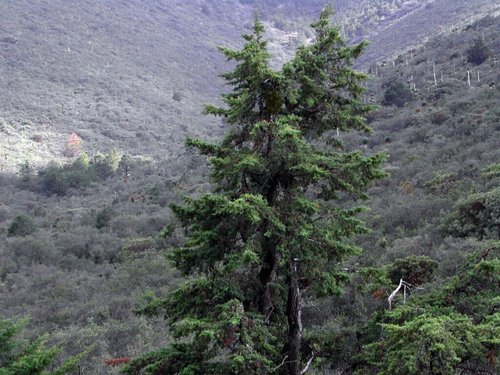
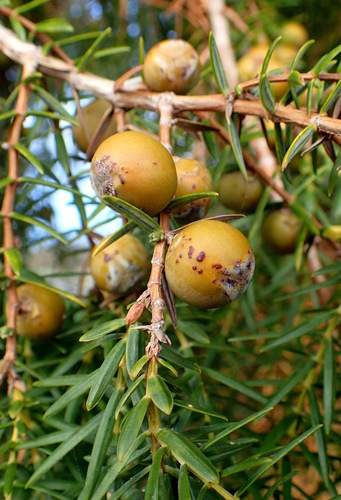
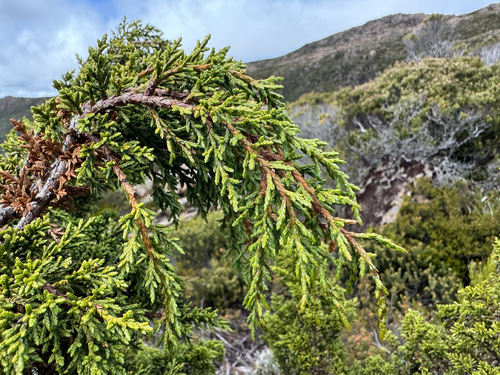
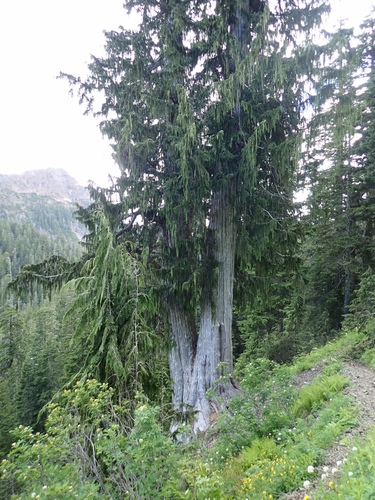
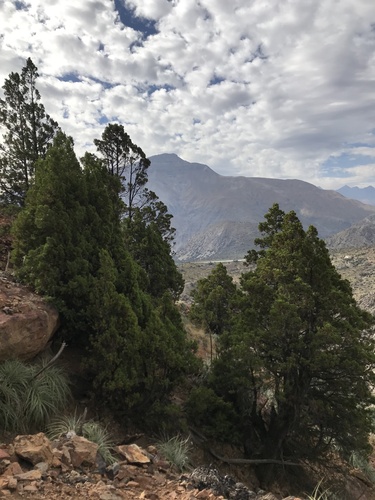
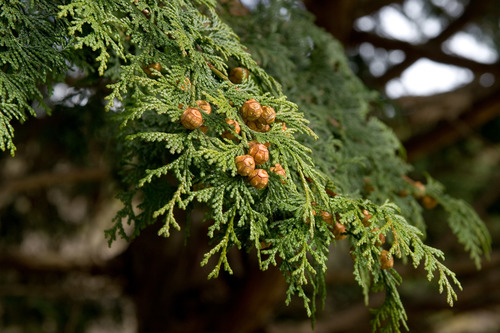
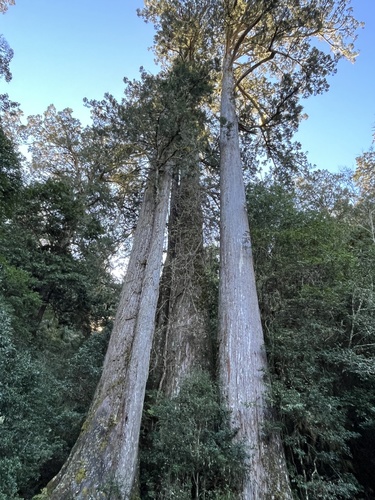
Taiwania cryptomerioides Hayata is one of the largest tree species in Asia. It can reach a maximum height of 90 m (300 ft), and its trunk measures up to 4 m (13 ft) in diameter above the buttressed base. On young trees under around 100 years old, leaves are needle-like or awl-shaped and 8–15 mm (0.31–0.59 in) long. As the tree reaches maturity, leaves gradually become more scale-like, with a shorter length of 3–7 mm (0.12–0.28 in). This species produces small cones that are 15–25 mm (0.59–0.98 in) long, each bearing about 15–30 thin, fragile scales; each individual scale holds two seeds. Taiwania cryptomerioides is native to eastern Asia, growing in the mountains of central Taiwan, and occurs locally in southwest China (including Guizhou, Hubei, Sichuan, Yunnan, and Tibet), adjacent Myanmar, and northern Vietnam. Many populations of this species are endangered due to illegal logging to harvest its valuable timber. Its past geographic range was very likely more extensive than it is today, before widespread logging of the species. Some botanists have classified mainland Asian populations as a separate distinct species, Taiwania flousiana, but the observed differences between mainland and Taiwanese populations are not consistent when comparing multiple specimens from each region.