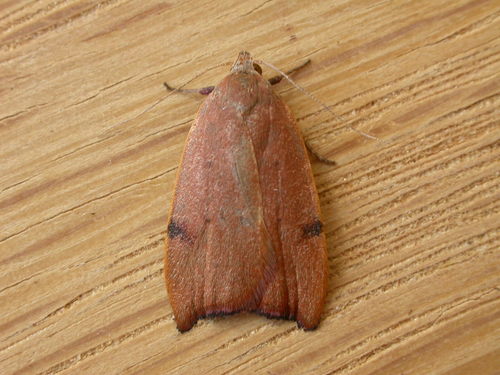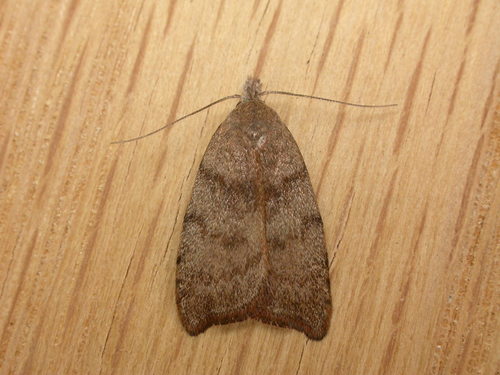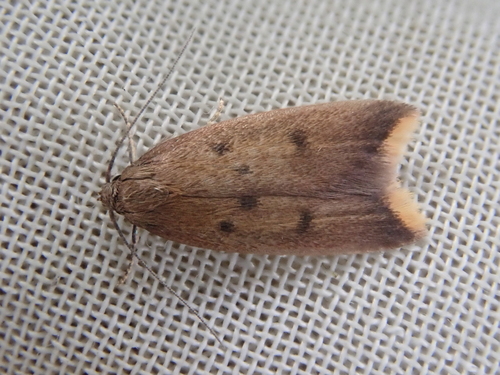
About Tachystola acroxantha (Meyrick, 1885)
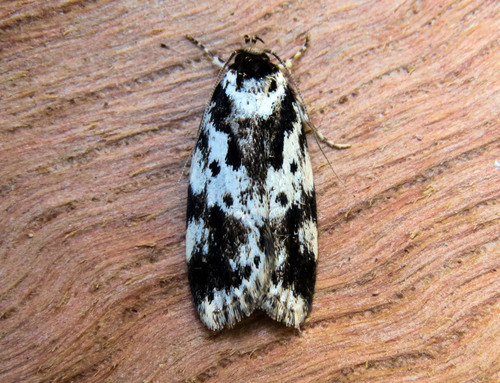
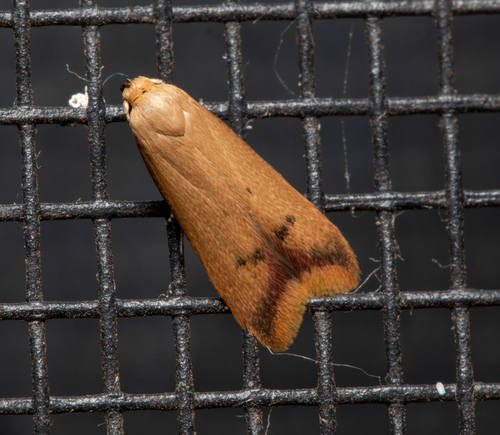
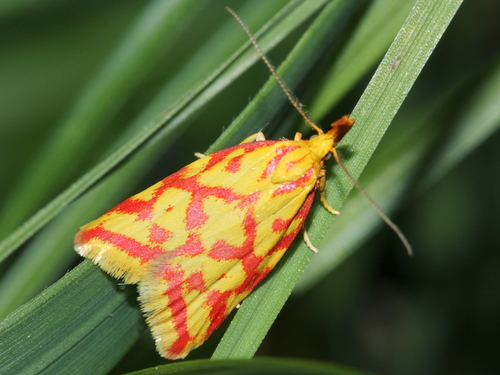
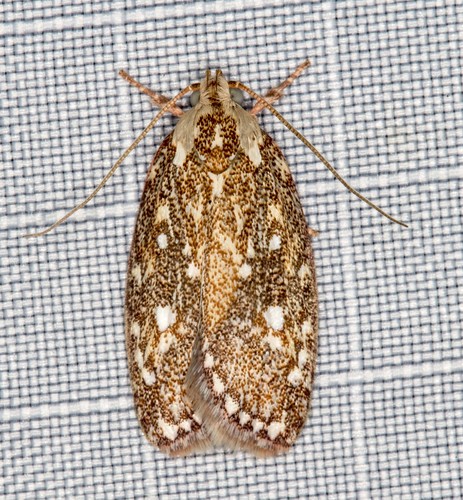
Scientific name: Tachystola acroxantha (Meyrick, 1885). This moth has a wingspan of 13–15 mm. In Britain, adults fly from late April to September, and may have two extended generations or a continuous sequence of broods. Adults are attracted to light, and have been recorded in gardens, heathland, and a flour mill. Eggs of this species have not been formally described. Fully grown larvae measure 11–14 mm in length. The larval body is translucent, ranging from greyish white to creamy white. The digestive tract appears as a darker dorsal line, which gives the entire larva a grey appearance. The larval head is brown, with darker mandibles. In Australia, larvae are found between flat, spun fallen Eucalyptus leaves on the ground or on fallen branches, and they prefer moist leaves. In Great Britain, Alexander Allen obtained eggs from a captured wild female, and observed that newly hatched larvae initially feed gregariously inside a shared silken web. As larvae mature, they feed individually. Some larvae accepted withered leaves as food, but all tested larvae preferred fresh leaves. The first wild larva recorded in Great Britain was found in March 1998 in the garden of the Natural History Museum, London (BMNH). These wild larvae were located inside loose silken tubes covered with leaf fragments and frass, between dry layered leaves of London plane (Platanus × hispanica). Pupae develop within the larval feeding site, between spun leaves. The pupa is enclosed in a loose inner cocoon, which is spun inside a tougher outer silken cocoon covered in frass. This moth is native to Australia, where it occurs in New South Wales, Tasmania, and Victoria. It has been introduced to New Zealand and Great Britain, most likely via imported plants. The first recorded specimen in Britain was collected in 1908 at Ottery St Mary, Devon. Today it is found in southern England, as well as Cheshire and Lancashire.