About Tachycineta leucopyga (Meyen, 1834)
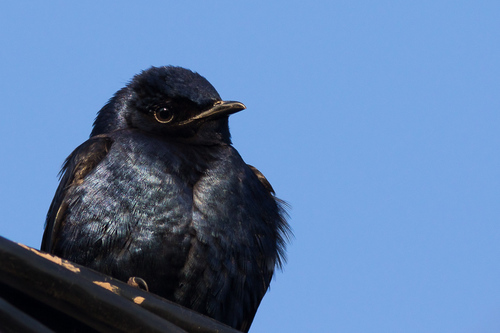
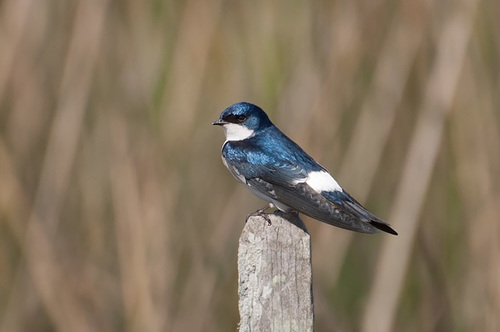
The Chilean swallow, scientifically named Tachycineta leucopyga (Meyen, 1834), is approximately 13 centimetres (5.1 in) long and weighs 15–20 grams (0.53–0.71 oz). Its upperparts are glossy blue-black, while its underparts are white, and it has a white rump. Its wings and tail are black, with white tips on the inner secondaries and tertials. Both its underwing coverts and auxiliaries are grey, and its bill and legs are black. The sexes of this species look identical, while juvenile Chilean swallows are duller and browner than adults. The Chilean swallow resembles the white-rumped swallow, but it does not have the white forehead that the white-rumped swallow has. It also has bluer upperparts and grey underwing-coverts, and the breeding ranges of the two species have almost no overlap. This swallow is native to Argentina, Bolivia, Brazil, Chile, the Falkland Islands, Paraguay, and Uruguay. It occurs as a vagrant in South Georgia and the South Sandwich Islands, and it is also present in Peru, though its origin in this area is uncertain. Its breeding range extends from the Atacama Desert in Chile and most of Argentina to the southern tip of South America. Chilean swallows are year-round residents in the northern portion of their range, while the populations in the southern part of the range are migratory. The wintering location of this southern migratory population is not well understood, but it appears to winter in northern Argentina, southern Brazil, Uruguay, and possibly Bolivia.