About Tachybaptus dominicus (Linnaeus, 1766)
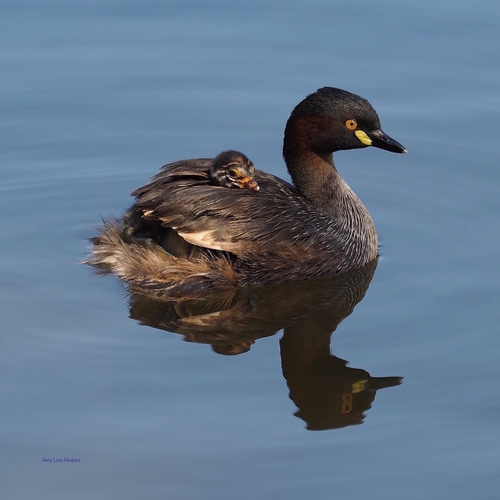
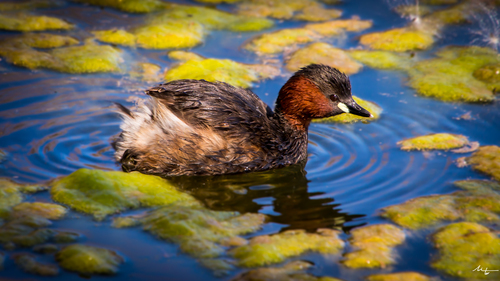
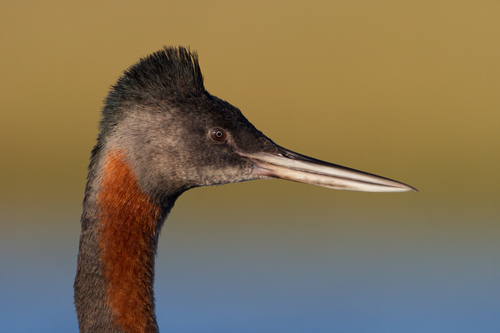
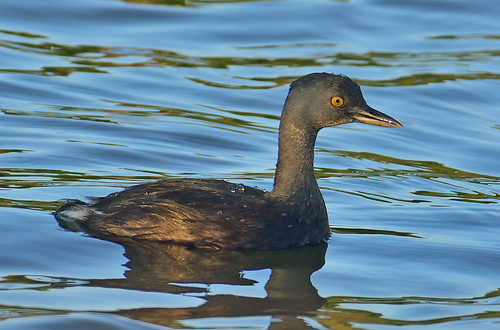
The least grebe, Tachybaptus dominicus, ranges in length from 21–27 cm (8.3–10.6 in) and in weight from 112–180 g (4.0–6.3 oz), with size varying across subspecies and regions. Populations in Panama are smaller: males have an average weight of 129 g (4.6 oz) and females average 116 g (4.1 oz). West Indies populations are larger, with males averaging 161 g (5.7 oz) and females averaging 133 g (4.7 oz). Texas populations are intermediate, with males averaging 139 g (4.9 oz) and females averaging 122 g (4.3 oz). Even the largest subspecies of least grebe are smaller and lighter than any other grebe species. Like all grebes, the least grebe has legs set far back on its body. This adaptation makes it an excellent swimmer and diver, but prevents it from walking well. It is a small, plump bird with a fairly short, sharp-pointed beak and bright yellow eyes, and typically appears quite dark overall. Breeding adult least grebes are brownish grey on the upper body, with a darker blackish crown and throat, a brownish chest, and pale underparts. They display a white wing patch when in flight. Non-breeding adults are paler and have a whitish throat, while immature birds are paler and greyer than full adults. Unlike all other species in its genus, the least grebe has no chestnut coloring on its neck. Least grebes inhabit a wide variety of wetland habitats, including freshwater ponds, lakes, marshes, slow-flowing streams and rivers, roadside ditches, and mangrove swamps. In general, they prefer bodies of water with abundant vegetative cover, especially along the edges, and will even use nearly completely overgrown wetlands. They may choose small, temporary bodies of water for breeding to avoid their chicks being preyed on by large fish.