About Tabebuia aurea (Silva Manso) Benth. & Hook.fil. ex S.Moore
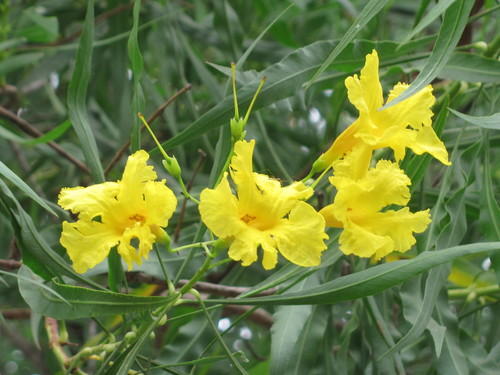
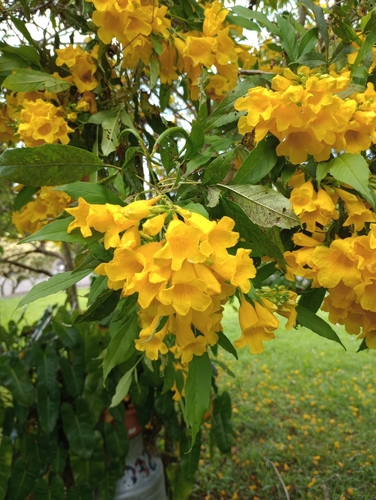
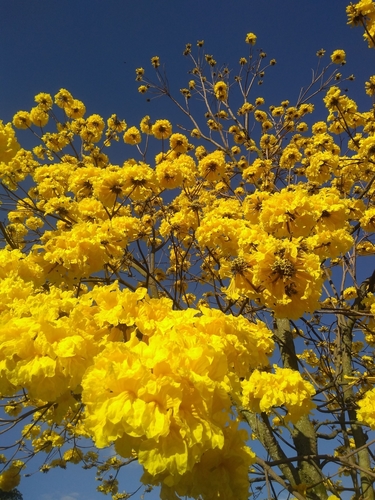
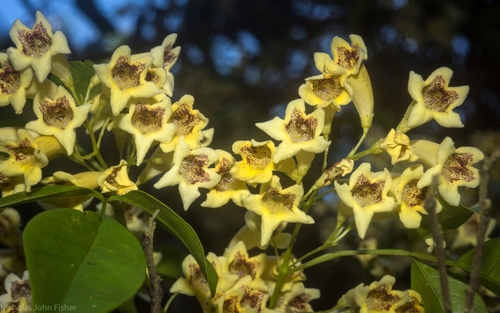
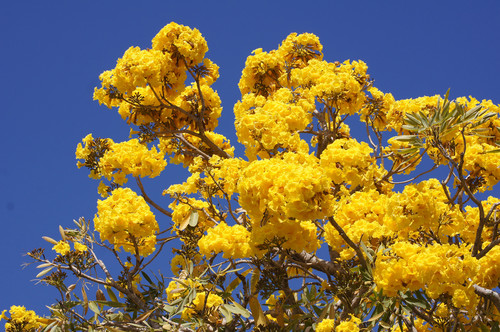
This species, scientifically named Tabebuia aurea (Silva Manso) Benth. & Hook.fil. ex S.Moore, is a small dry season-deciduous tree that grows up to 8 meters tall. Its leaves are palmately compound, formed of five or seven leaflets. Each individual leaflet measures 6–18 cm in length, is green in color, and covered in silvery scales on both the upper and lower surfaces. The species produces bright yellow flowers that can reach up to 6.5 cm in diameter; several flowers grow together in a loose panicle. Its fruit takes the form of a slender capsule 10 cm long. Tabebuia aurea is a popular ornamental tree grown in subtropical and tropical regions, cultivated for its striking mass display of flowers that appears on leafless shoots at the end of the dry season. In ecology, the presence of this species in riparian areas of the Caatinga in northeastern Brazil makes it a crucial resource for Spix's macaw (Cyanopsitta spixii). Spix's macaw is currently extinct in the wild, with fewer than 100 individuals remaining in captivity. Any future wild reintroduction of Spix's macaw will need to provide sufficient populations of T. aurea to support nesting and other needs. While Tabebuia aurea is not classified as a globally threatened species, its local populations have declined due to unsustainable timber harvesting and other factors.