About Tabanus bromius Linnaeus, 1758
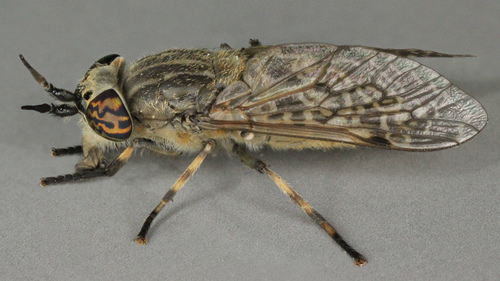
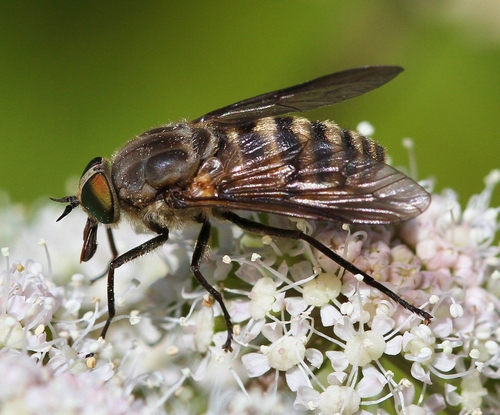
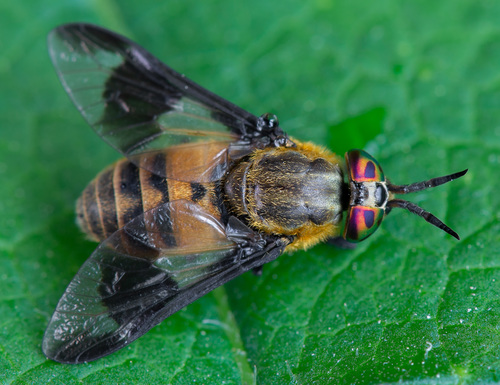
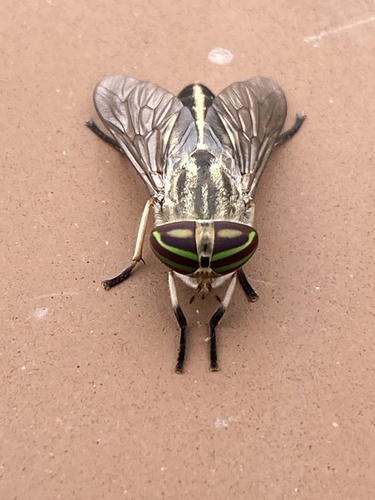
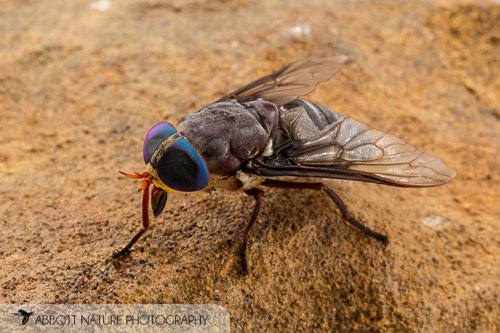
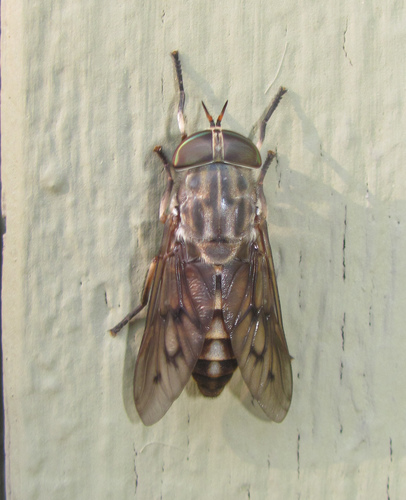
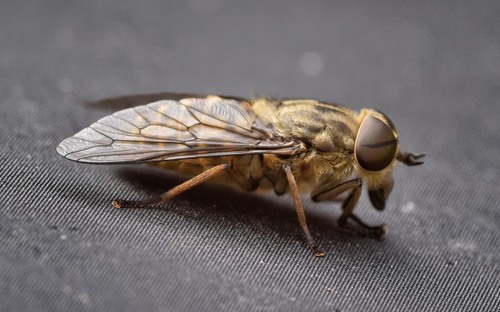
Tabanus bromius (Linnaeus, 1758) is one of the smaller species of Tabanus found in Europe, with an adult body length of about 13.5 to 15 millimetres (0.5 to 0.6 inches). Its mesonotum is grayish, marked with five indistinct longitudinal lines on its upper surface. The abdomen is black, covered in hairs, and has three rows of yellowish spots; the ventral side of the abdomen is light gray. The head is silver-gray, and the compound eyes are green with a violet-red transverse band. The wings are transparent with brown veins, and measure 10.5 to 11 millimetres (0.41 to 0.43 inches) in length. Female Tabanus bromius are bloodsucking flies that feed on mammalian blood, primarily from cattle and horses, though they will also bite humans. Males feed on nectar, most commonly from Angelica sylvestris. These horseflies are active in broad daylight, and prefer hot, humid, windless conditions. They are particularly aggressive during mid and late summer, and their bites cause painful welts. Adult Tabanus bromius are on the wing from late May to early September. This species is widespread across most of Europe, the eastern Palearctic realm, North Africa, and the Near East. It prefers open habitat such as hills or sparsely wooded areas.