About Systena frontalis (Fabricius, 1801)
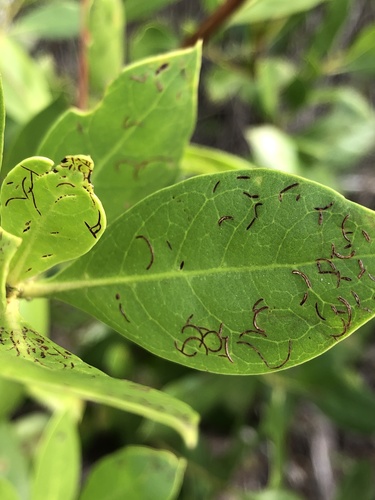
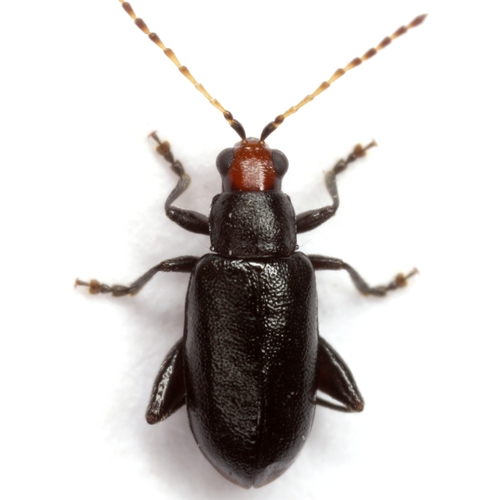
Systena frontalis, commonly known as the red-headed flea beetle, is a species of flea beetle in the leaf beetle family Chrysomelidae, found across North America. It gets its common name from its red head, which contrasts sharply with its solid black body. Like all other flea beetles, it has strong jumping-adapted saltatorial hind legs. As a beetle species, it is holometabolous, meaning it undergoes complete metamorphosis during its life cycle. Mature larvae of this species are off-white, measure 5 to 10 millimeters in length, have a hardened sclerotized head capsule, and bear a short protrusion on their posterior end. The red-headed flea beetle is a common insect pest in the eastern United States. While its exact origin is not confirmed, it is widely believed to be a native North American species. It has developed into a highly destructive pest affecting ornamental plants grown in commercial nurseries. When feeding, it creates extensive perforations in leaves; it is known to feed heavily on common ironweed (Vernonia fasciculata), and also commonly feeds on hydrangea plants. Currently, researchers are studying the phenology and basic biology of this species to develop more sustainable pest management strategies than the frequent pesticide spraying that is currently common practice.