About Syssphinx bicolor Harris, 1841
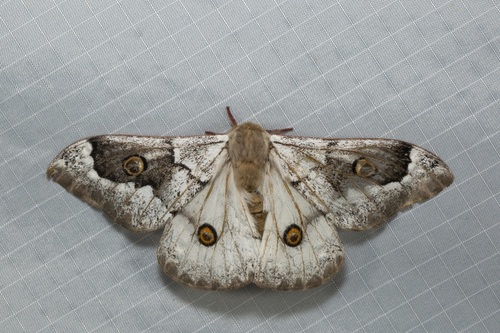
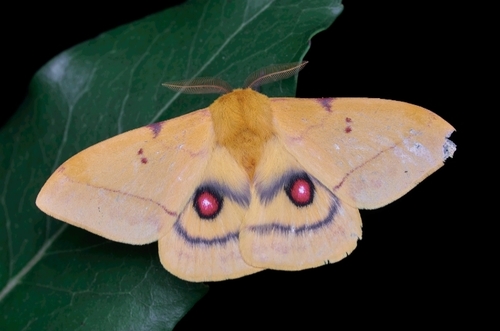
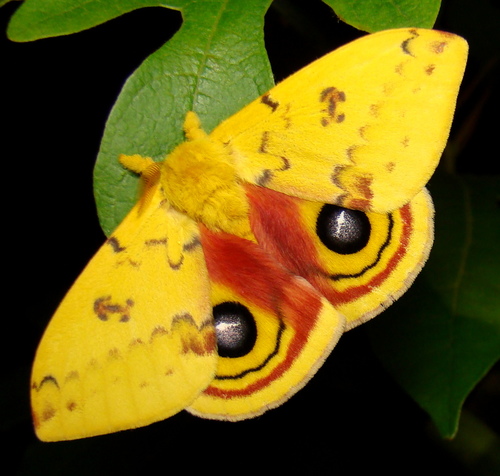
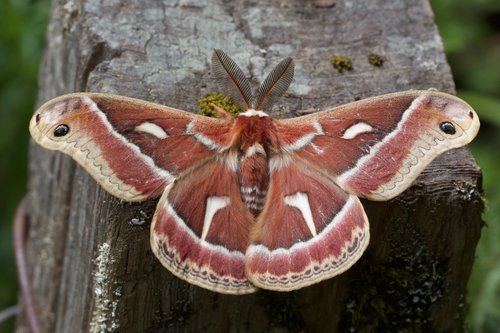
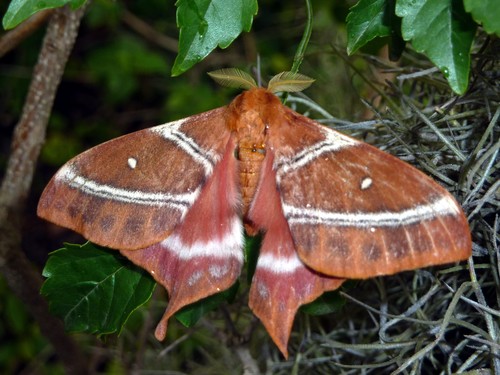
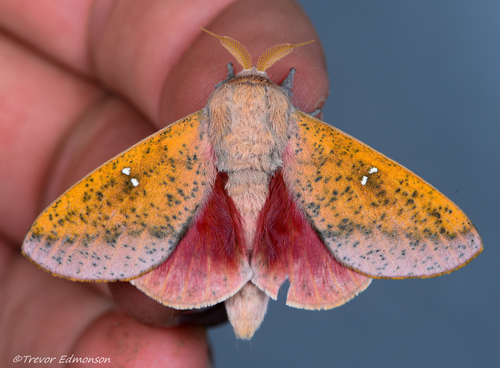
This species, commonly called the honey locust moth, has the scientific name Syssphinx bicolor Harris, 1841. The moth's wings range in color from grayish to yellow, orange, and dark reddish brown, with variable amounts of black spotting and pinkish shading. Its forewing postmedial line extends to the costa before the apex. The white reniform spot on the forewing can be double, single, or entirely absent. The moth's wingspan measures 4.7–6.7 centimetres, which equals 1.9–2.6 inches. This moth is primarily found in woodland habitats. Its pale green eggs are laid in clusters on the leaves of its host plant. Young, gregarious larvae are pale green, with four pairs of black thoracic filaments, a black horn at the tip of the abdomen, and a predominantly white lateral stripe. Older, solitary larvae are grass green, with two pairs of red horns on the thorax and one red horn at the tip of the abdomen. Multiple silvered horns run across the abdomen, the supraspiracular stripe is red and white, and the body is dotted with small white spots. The larva of the very similar bisected honey locust moth has green horns and lacks red coloring in its supraspiracular stripe. The dark chrysalis of Syssphinx bicolor is formed in a cell underground, and the species hibernates in the chrysalis stage. The honey locust moth produces three broods per year: first-brood adults are grayish, second-brood adults range from yellow to orange brown, and third-brood adults are darker with more extensive spotting.