About Syringa josikaea J.Jacq. ex Rchb.
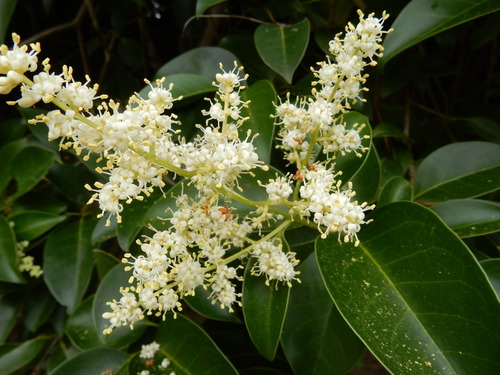
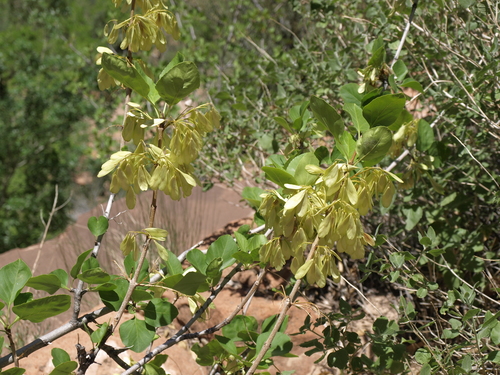
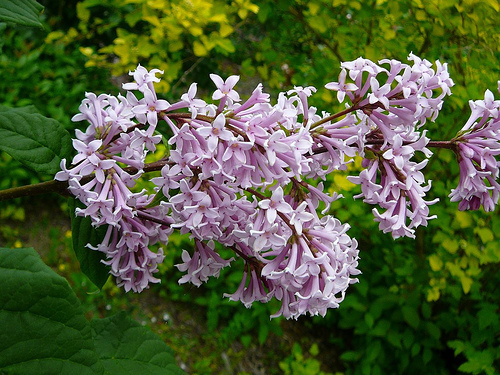
Syringa josikaea J.Jacq. ex Rchb., commonly known as Hungarian lilac, is a deciduous shrub that reaches 2–4 meters in height. Its leaves are elliptic-acute, 6–12 cm long, and have finely hairy margins. The fragrant dark pink flowers have a tubular corolla base 15 mm long, ending in a narrow four-lobed apex 3–4 mm across. Flowers are arranged in slender panicles up to 15 cm long and open in early summer. The fruit is a dry, smooth brown capsule that splits in two to release two winged seeds. Hungarian lilac belongs to the genus Syringa, which is distributed across Eurasia with a center of diversity in East Asia. It is one of only two Syringa species native to Europe; the other is common lilac (Syringa vulgaris), which has a more southerly distribution across the Balkan Peninsula and the southern Carpathians. Despite living near each other, Hungarian lilac and common lilac are only distant relatives within the genus. The closest relatives of Hungarian lilac are Syringa villosa and S. wolfii (treated as the synonym Syringa villosa subsp. wolfii), both native to East Asia. These two taxa together form the sister group of Hungarian lilac, and their genetic split is estimated to have occurred during the Gelasian period of the early Pleistocene, approximately 1.88 million years ago. This timeline aligns with a trend of cooling and desiccation across Eurasia during the Pliocene and Pleistocene, a climate shift thought to cause the east-west distribution disjunctions seen in many Eurasian plant and animal taxa. Plant fossils very similar to modern Hungarian lilac have been found in Miocene travertine deposits in Hungary, as well as Pleistocene interglacial deposits in Hungary and eastern Germany. Known fossil sites include quarries in Bilzingsleben (dated to 400 thousand years ago) and Weimar-Ehringsdorf (dated to approximately 200 thousand years ago), both located in Thuringia. These fossil remains show that Hungarian lilac was once much more widespread across Central Europe during warm Quaternary interglacial periods, and was only restricted to its current distribution in the Carpathians during the Last Glacial Maximum (LGM). This pattern supports the hypothesis that the Carpathians acted as a glacial refugium for plant species during the LGM. Today, Hungarian lilac is endemic to the Carpathians of Transylvania and western Ukraine. It occurs in just two populations, one in the Romanian Apuseni Mountains and one in the Ukrainian Carpathians, with only a small number of known locations for each population. Most locations support a limited number of individual plants; the Ukrainian population is estimated to number fewer than 1000 individuals. Total population size is hard to estimate because the species reproduces vigorously through clonal growth, which appears to be more common than sexual reproduction. The species has declined in recent decades, so it is listed as endangered, and its populations continue to decrease today. Threats are mostly human-caused; the species is primarily harmed by destruction of its preferred habitat near streams and rivers, driven by road construction, river damming, and habitat conversion. In cultivation, Hungarian lilac grows well in cool to temperate climates and is fully frost hardy. It tolerates growing conditions from full sun to partial shade. Despite its origin in continental Europe, it has grown surprisingly well in cultivation in the oceanic climate of the Faroe Islands (northwestern Europe) and as far north as arctic northern Norway, reaching Kirkenes. It has hybridized in cultivation with the Chinese species Syringa komarowii, producing the hybrid named Syringa × josiflexa.