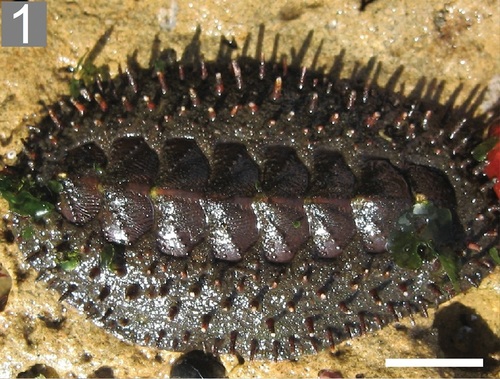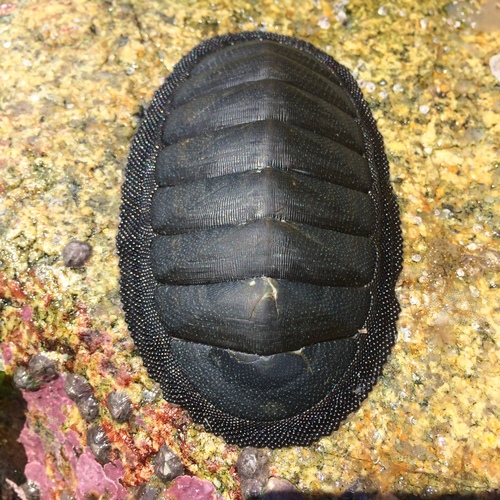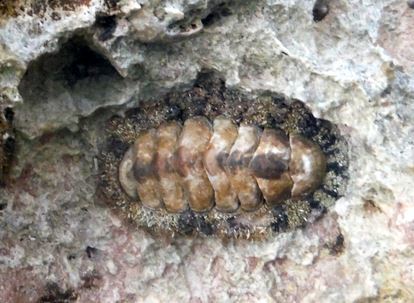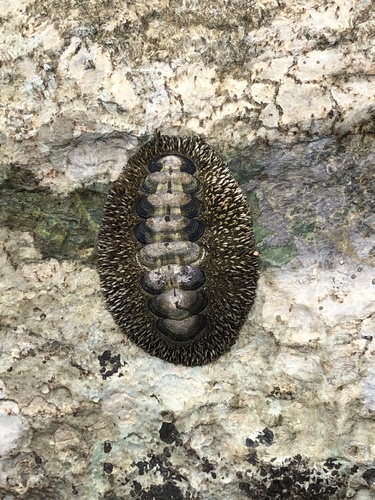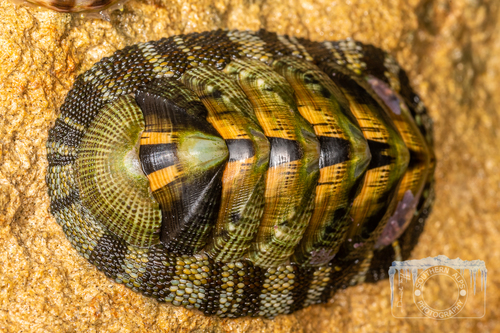
Sypharochiton pelliserpentis (Quoy & Gaimard, 1835) is a animal in the Chitonidae family, order Chitonida, kingdom Animalia. Not known to be toxic.

Photo of Sypharochiton pelliserpentis (Quoy & Gaimard, 1835) (Sypharochiton pelliserpentis (Quoy & Gaimard, 1835))
🦋 Animalia

Sypharochiton pelliserpentis (Quoy & Gaimard, 1835)

Sypharochiton pelliserpentis (Quoy & Gaimard, 1835)

Sypharochiton pelliserpentis, the snakeskin chiton, is a chiton found around New Zealand and southern Australian coasts on intertidal rock surfaces.

Family
Genus
Sypharochiton
Order
Chitonida
Class
Polyplacophora

About Sypharochiton pelliserpentis (Quoy & Gaimard, 1835)

Sypharochiton pelliserpentis can be told apart from its closely related species Sypharochiton sinclairi by three key traits: it lacks longitudinal striping on its valves, has an olive base color (while S. sinclairi is turquoise), and has a different radula length. The two species also occupy different intertidal zones: S. pelliserpentis is typically found on top of rocks above the mid-tide level, while S. sinclairi is generally located under stones and in rock pools in the lower tidal and subtidal regions. This species, commonly called the snakeskin chiton, has a country-wide distribution around all of New Zealand, including the Chatham Islands. It is also found along the coasts of Tasmania, Victoria, and New South Wales in Australia. On New Zealand shores, S. pelliserpentis is often extremely abundant, reaching densities of up to 228 individuals per square meter. It occupies a wide range of shore levels wherever solid substrate is available, from inner estuaries to high-energy surf beaches. It generally lives on rock surfaces rather than under stones, and is often found above the neap high water mark.
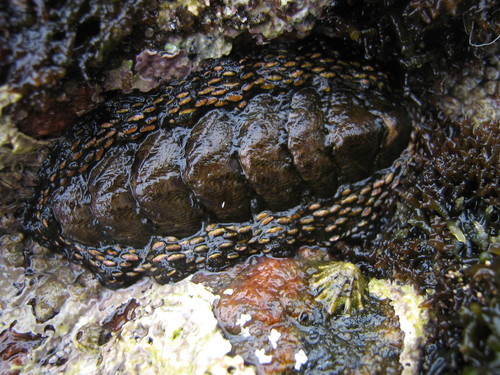
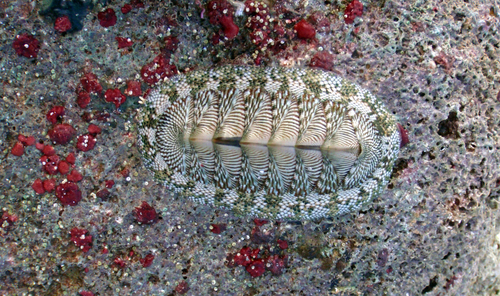
Photo: (c) Danilo Hegg, all rights reserved, uploaded by Danilo Hegg

Taxonomy

Animalia Mollusca Polyplacophora Chitonida Chitonidae Sypharochiton

More from Chitonidae

Sources: GBIF, iNaturalist, Wikipedia, NCBI Taxonomy · Disclaimer

Identify Sypharochiton pelliserpentis (Quoy & Gaimard, 1835) instantly — even offline

iNature uses on-device AI to identify plants, animals, fungi and more. No internet needed.

Download iNature — Free

Start Exploring Nature Today

Download iNature for free. 10 identifications on us. No account needed. No credit card required.

Download Free on App Store