About Syntrichia ruralis (Hedw.) F.Weber & D.Mohr
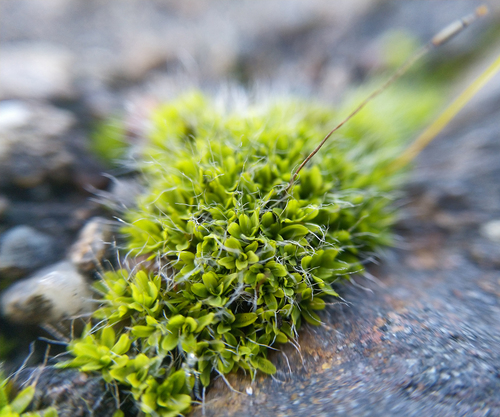
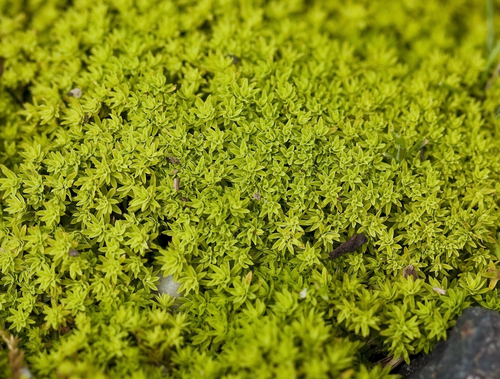
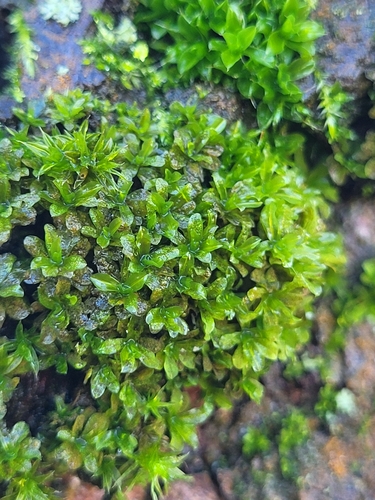
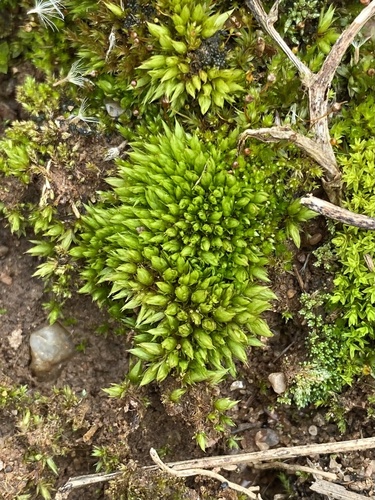
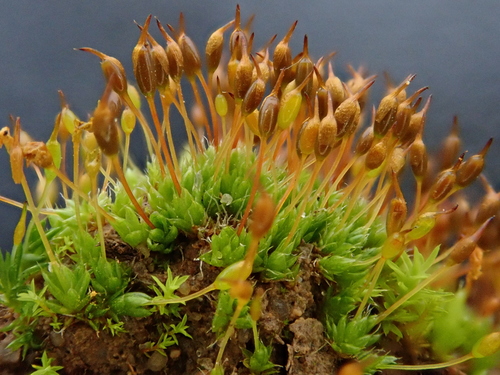
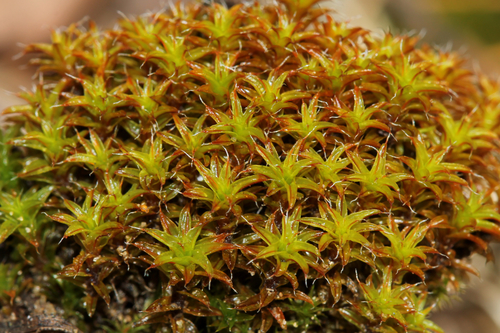
Syntrichia ruralis, commonly called twisted moss and star moss, is a moss species belonging to the family Pottiaceae. It has a cosmopolitan distribution, occurring in North America, the Pacific region, Europe, Asia, the Middle East, North and South Africa, South America, and Australia. It grows in a wide range of climates, including the Arctic, boreal regions, temperate areas, and deserts. Its habitat types include tundra, coniferous forest, grassland, sagebrush steppe, and other habitat categories. This moss grows in tufts made of erect stems that reach up to 4 centimeters in height. When wet, the moss is bright green, and its leaves are loose. When it dries, its leaves wrap around the stem, and the moss turns reddish brown. It is dioecious, and it also reproduces via vegetative reproduction. While it grows across many habitat types, it is not usually a dominant species. It can grow on many different types of soil, but it occurs most often on calcareous soils. It tolerates a wide range of elevations and sunlight levels. It may be part of cryptogamic crusts, and it helps stabilize soil and reduce erosion. This species can dry out and remain dormant for many years, regaining metabolic activity after decades of desiccation. It is used as a model organism for desiccation research. Within one hour of rehydration, it begins producing new proteins, and it resumes photosynthesis within two hours of rehydration.