About Synodus dermatogenys Fowler, 1912
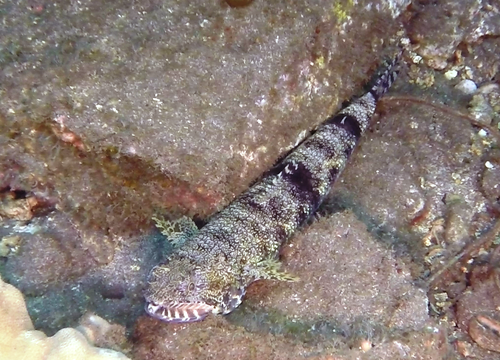
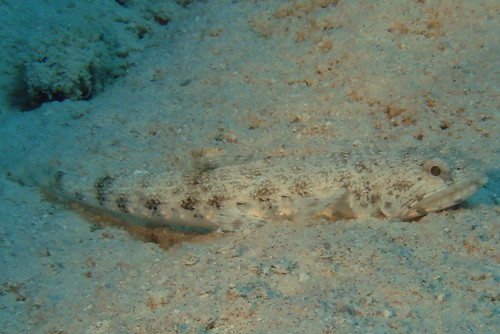
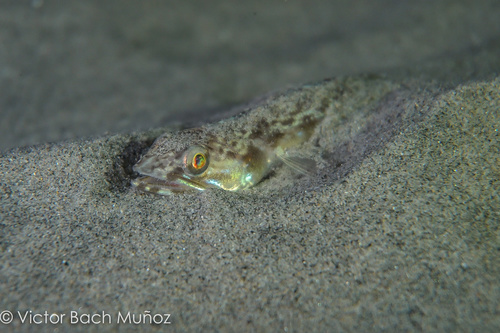
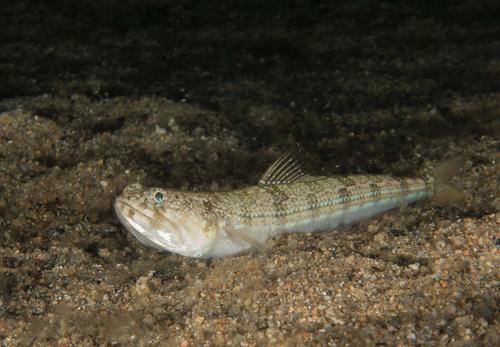
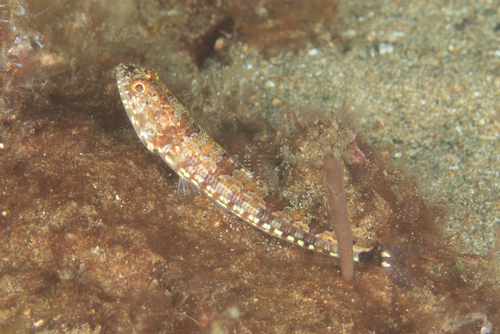
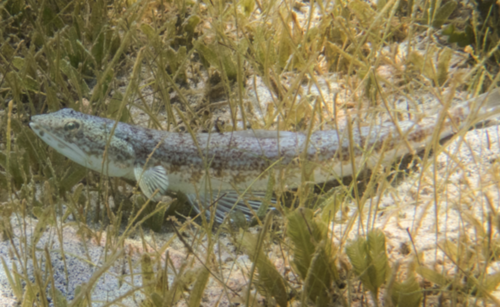
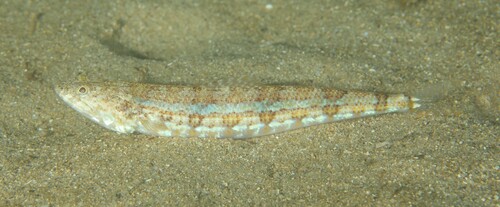
Synodus dermatogenys is a reef-associated marine fish species that occurs at depths ranging from 1 to 70 meters in tropical climates. The maximum recorded total length of an unsexed male of this species is approximately 24 centimeters (9.44 inches). It can be recognized by five or six red-brown vertical bars that intersect a broken red horizontal band on its flank; a line of whitish dots runs immediately below this band, though the species' overall coloration can vary based on its surrounding environment. This species is native to the Indo-Pacific region, the Red Sea, the Hawaiian, Line, Marquesan, and Tuamoto islands, ranging north to the Ryukyu Islands and south to Lord Howe Island, and is also found in Micronesia, the southeast Atlantic, Algoa Bay, and South Africa. It is commonly found in sand-rubble areas of lagoons and seaward reefs, down to benthic depths of over 20 meters. The species buries itself in sand, leaving only its eyes and nostrils exposed. It can occur either solitarily or in small groups. Commonly called the sand lizardfish, it is a predator of small fish and crustaceans, with a mouth full of sharp, needle-like teeth. Sand lizardfish displays biofluorescence: when illuminated by blue or ultraviolet light, it re-emits the light as green, and appears different than it does under white light. Biofluorescence may help the species with intraspecific communication and camouflage.