About Syngnathus fuscus Storer, 1839
Scientific name: Syngnathus fuscus Storer, 1839
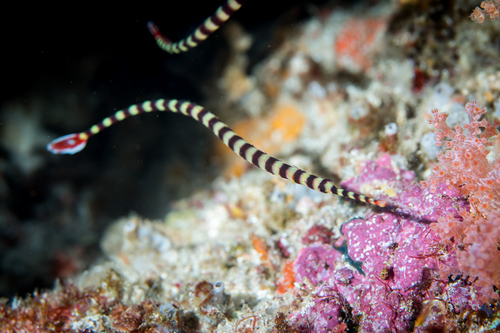
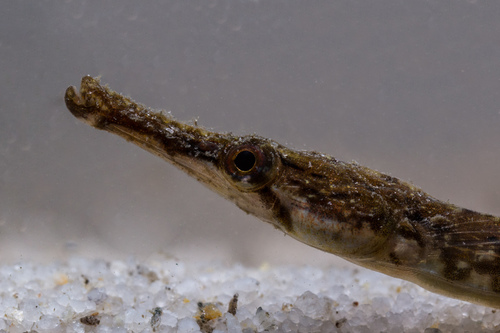
The northern pipefish has a long, thin, rigid body that is encased in bony rings. It is typically 10 to 20 cm long, and can reach a maximum length of 30.0 cm. It has a long, thin head that is rounded at the end of the mouth. Its dorsal fin spans across 4 to 5 of the bony rings covering its body. This species has a brood pouch formed by two lateral flaps that meet along the fish's central line. The caudal fin is rounded, the anal fin is small, and the species has no ventral or pelvic fins. It is generally olive or brownish on its upper side. The northern pipefish is often considered an invader in freshwater ecosystems. It feeds on many different organisms within these ecosystems, and studies have found zooplankton to be the primary component of its diet. There is documented evidence that this species undertakes seasonal migration.
This species occurs in the north-western Atlantic, ranging from the Gulf of Saint Lawrence in Canada to north-eastern Florida in the United States and into the north-western Gulf of Mexico. It can be found at depths from less than 2 meters to 366 meters. It is most commonly found in bays, tide pools, and any areas sheltered from breaking surf.