About Synbranchus marmoratus Bloch, 1795
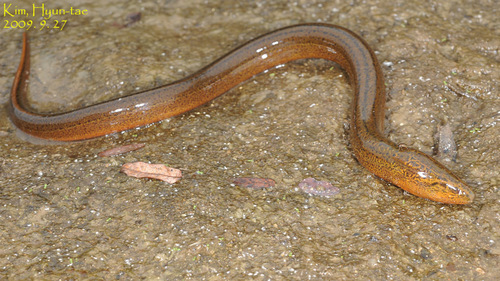
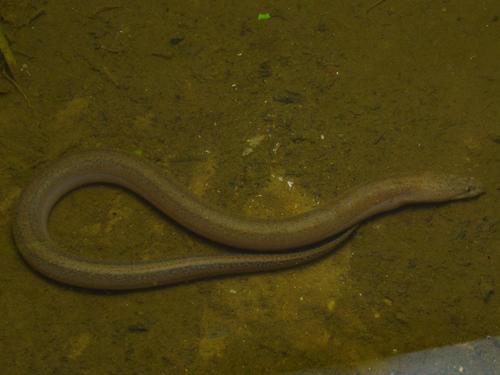
Synbranchus marmoratus, commonly called the marbled swamp eel, has an elongated, cylindrical body. It reaches a maximum total length of around 150 cm (60 in), with a more typical adult length of 50 cm (20 in). Its dorsal and anal fins are vestigial, and it has no paired pectoral or pelvic fins at all. The inner lining of its mouth contains many blood vessels, which provides an extra gas exchange surface when the eel breathes air.
When submerged in water, the marbled swamp eel breathes using its fully functional gills. When on land, it can breathe using the linings of its mouth and pharynx. It is a nocturnal predator that feeds on any small prey available in its habitat, including frogs, tadpoles, fish, spiders, insects, and other invertebrates. It moves through thick vegetation along river banks, searches shallow water for prey, and enters burrows to find hidden animals. When on land, it resides in a burrow, and tunnels deeper into the ground as conditions become drier to stay below the water table. In laboratory settings, these eels have stayed alive for over six months in drying burrows, moving through the tunnel networks.
The marbled swamp eel is one of the few fish species found upstream of large waterfalls, and it acts as a major predator of tadpoles in areas that other fish cannot reach. It is a sequential hermaphrodite, a trait that benefits it when colonizing new areas or surviving harsh habitats. Juvenile marbled swamp eels are either primary males, or females. Females transition into secondary males when they reach a length between 45 and 60 cm (18 and 24 in). Secondary males can be distinguished from primary males through examination of their gonads. Males dig a burrow and guard the species' nest.