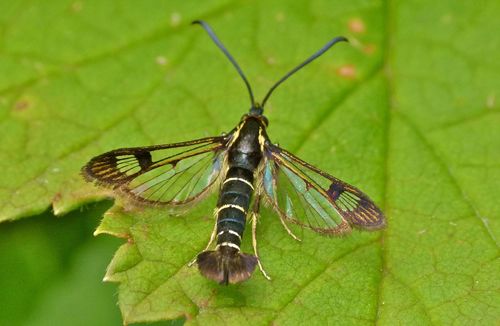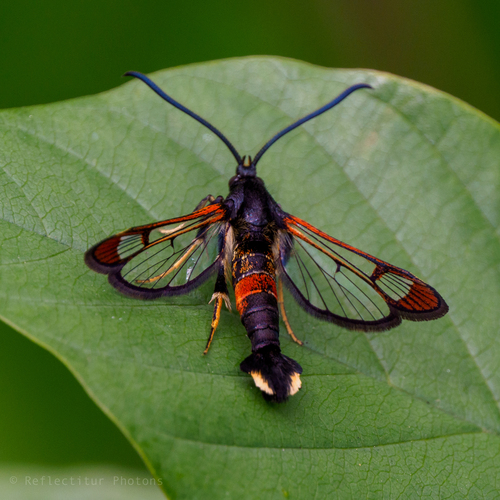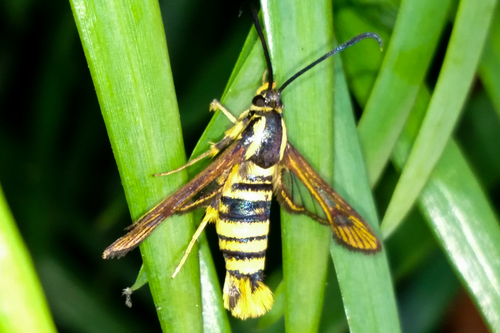
About Synanthedon resplendens (Edwards, 1881)
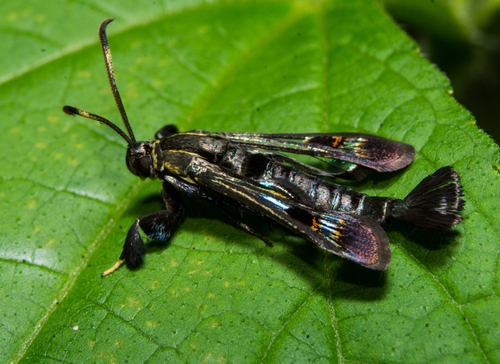
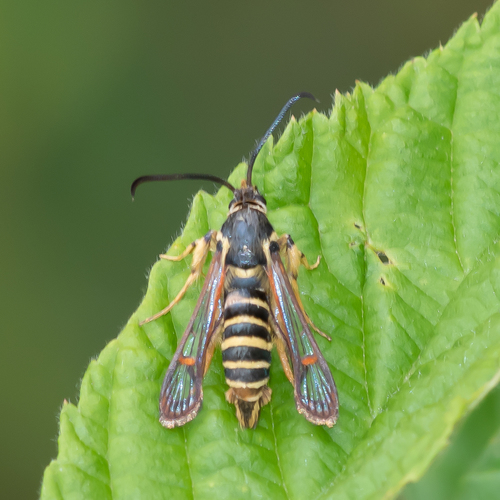
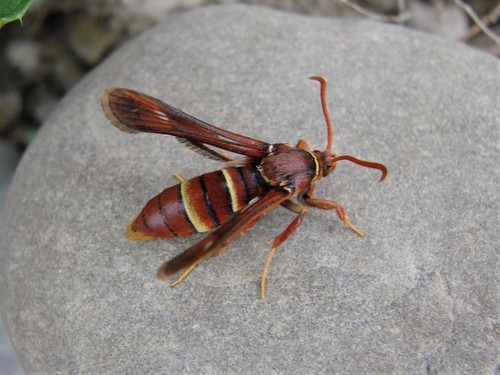
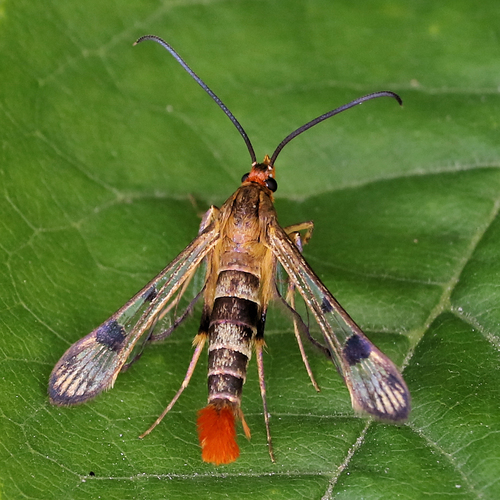
Synanthedon resplendens, commonly called the sycamore borer moth, is a species of clearwing moth native to western North America. The larvae of this moth live under the bark of sycamore, ceanothus, and coast live oak trees, and they have been found in avocado trees on rare occasions. Confirmed sycamore host species include California sycamore, Arizona sycamore, and American sycamore. While coast live oak is a confirmed host for this moth, it is likely that many or most other western oak species are also used as hosts. The sycamore clearwing moth is found throughout all of California, ranging north as far as Yukon and east at least as far as New Mexico. The related ceanothus clearwing moth, Synanthedon mellinipennis, has a partially overlapping geographic range with Synanthedon resplendens and uses a similar set of host plants. This moth produces one new generation per year. Adult moths emerge and are active in flight from May through early August, with peak emergence occurring in June and July. Adults only live for approximately one week. During this short adult lifespan, females lay ovoid, gold-colored eggs singly on bark within small cracks or depressions. Egg laying and larval feeding strongly favor old or slow-growing trees and injured tree tissues. Larvae rarely damage the cambium or feed within tree wood. Larvae mine the bark below its surface, creating numerous winding serpentine feeding tunnels. Tunnels can reach a total area of over 100 cm² (16 sq in). Larval galleries are most commonly found around the base and lower trunk of infested trees, though they may also be found in branches up to 9 m (30 ft) above the ground. Larvae expel reddish, sawdust-like frass from their tunnels, and this frass accumulates in branch crotches or on the ground below the infested area. After repeated infestations, the outer bark surface over the feeding tunnels becomes roughened, and may produce wet ooze. Pupae develop just under the bark surface, and they protrude through the bark when the adult moth is ready to emerge. This species overwinters as either larvae or pupae inside the bark tunnels. Pupal skins may remain visible inside the adult emergence holes after emergence. Adult emergence holes are round, with a diameter ranging from 3 mm (0.12 in) to 6 mm. On oak trees, these emergence holes are only found within bark cracks.