About Symmetrischema striatella (Murtfeldt, 1900)
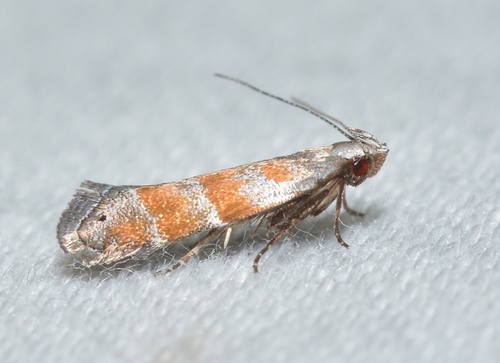
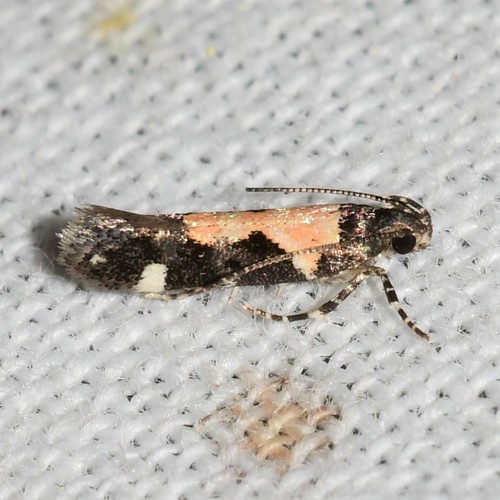
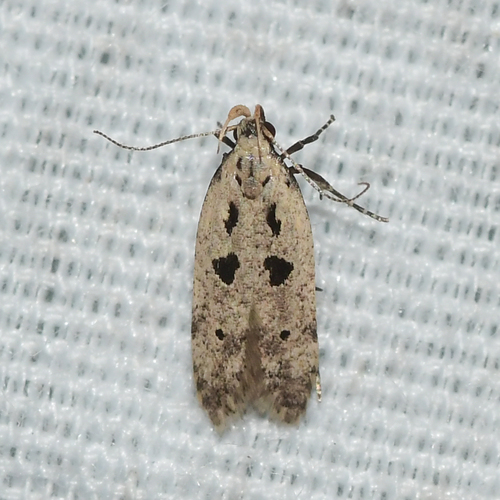
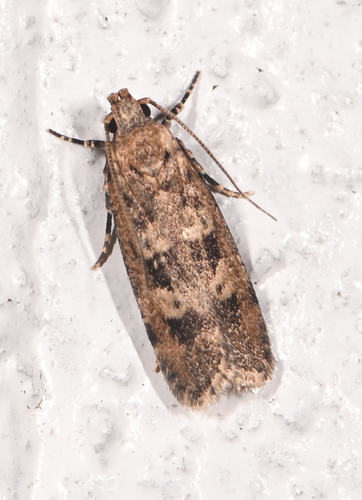
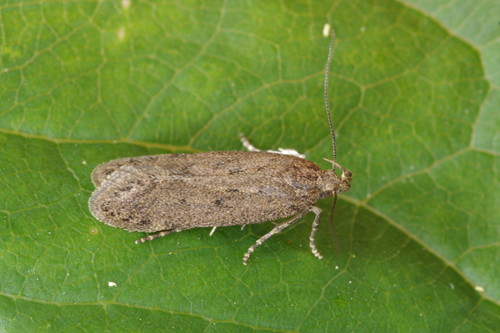
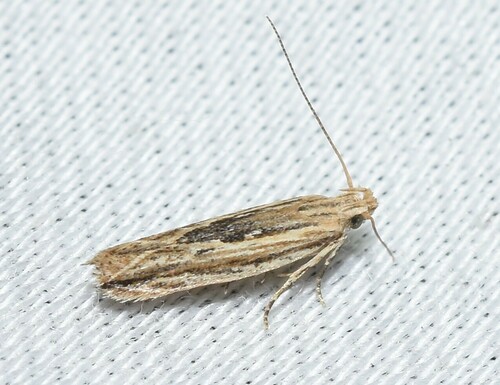
Symmetrischema striatella is a moth species belonging to the family Gelechiidae. It was first described by Mary Murtfeldt in 1900. This moth is native to North America, where it has been recorded in the states of Alabama, Arkansas, California, Florida, Illinois, Louisiana, Maine, Maryland, Mississippi, Missouri, New Jersey, Oklahoma, South Carolina, Tennessee, and Texas. It has also been accidentally introduced to New Zealand. The wingspan of adult Symmetrischema striatella ranges from 11 to 13 millimetres. Its forewings are light brown or brownish ocherous, and are lightly speckled with black. A black longitudinal subcostal line runs from the base of the forewing to the apex, curving slightly upward and becoming more intense near the apex. Below this subcostal line, there are two more or less defined blackish striations: the one on the inner margin is quite broad and diffused, while the discal streak is variable, not continuous, and often made up of two or three separate dashes. The hindwings are silken ashy white, darkening to cinereous, or ash gray, toward the tips. The larvae of this species feed on the berries of Solanum nigrum.