About Sylvia undata (Boddaert, 1783)
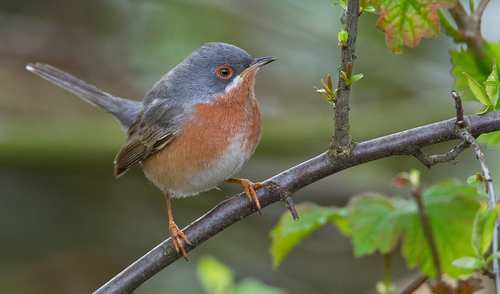
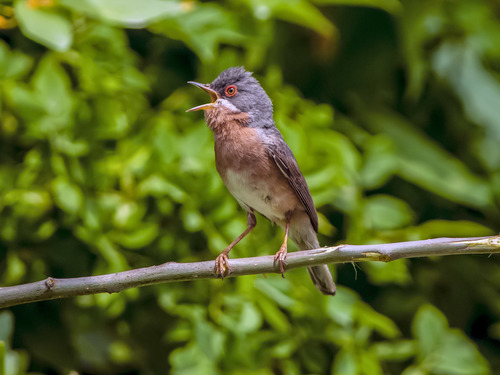
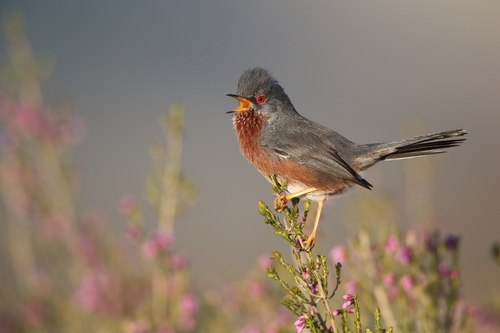
The Dartford warbler, with the scientific name Sylvia undata (Boddaert, 1783), is a small passerine bird that measures 13 cm (5.1 in) long. It is distinguished by its longer tail compared to other warblers. Its plumage has unobtrusive, muted tones that blend into the dry dead plants, old wood, or sunny greyish wood found in its preferred habitats. Like many typical warblers, the Dartford warbler has distinct male and female plumage. Males have grey backs and heads, reddish underparts, red eyes, and a reddish throat spotted with white. Their sides are a dull greyish tone that becomes clearer toward the abdomen. In some populations, males have bluish-grey or brownish-grey backs and heads. Females are paler on their underparts, especially the throat, and have browner grey upperparts. Females also have white spots on the throat, but these spots are smaller and less distinct than those of males. Juvenile birds look similar to females. This species is naturally rare. The largest European populations of this species are located on the Iberian Peninsula. Additional populations are found across much of France, in Italy, and in southern England and south Wales. In Africa, it occurs only in small northern areas, and winters in northern Morocco and northern Algeria.