About Sylvia ruppeli Temminck, 1823
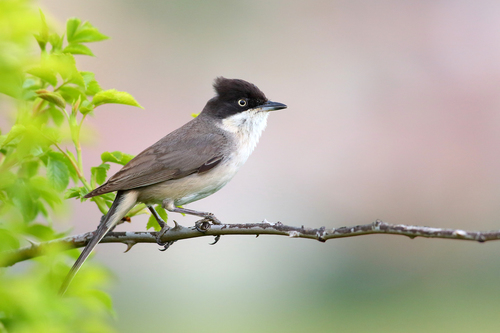
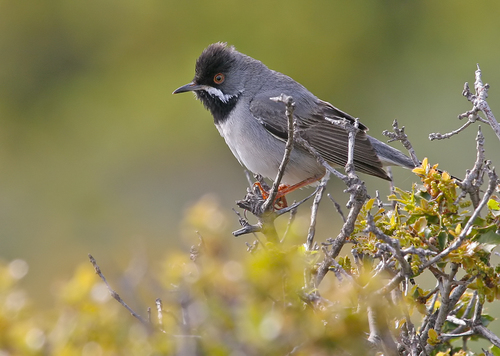
This species is a typical Curruca warbler. It is similar in size to the Sardinian warbler but has a slimmer build. Adult individuals have a plain grey back and paler grey underparts. They have a fine, pointed bill, brown legs, and red eyes. Breeding males have a striking appearance with a black head, and usually a black throat, which is separated by a white malar streak, or 'moustache'. Females have a pale throat, and their heads are grey rather than black. Their grey backs carry a brownish tinge. The song of this species is a slower, deeper rattle compared to the song of the Sardinian warbler. This species breeds in dry, warm environments, including rocky areas and hillsides covered in scrub and maquis, generally ranging from sea level up to around 800 to 1000 meters in elevation. It has been recorded at higher elevations in some regions: up to 1500 meters in southeastern Turkey, and up to 1600 meters on Crete. It occupies a wide variety of dry Mediterranean habitats, ranging from forested areas with enough undergrowth to maquis with sparse tree cover. It prefers open bushy oak and cypress woods, as well as grassy and rocky terrain with scrub cover of varying densities. Compared to the closely related Sardinian warbler, Rüppell's warbler depends less on tall, dense vegetation. During the non-breeding season, it commonly occurs in scrubby arid areas, as well as gardens, canebrakes, and hedgerows. While migrating, it can be found on bushy hillsides, mountain slopes, and in desert wadis that host Acacia trees.