About Sylvia nisoria (Bechstein, 1792)
The barred warbler, whose scientific names include Sylvia nisoria (Bechstein, 1792) and Curruca nisoria, is a passerine bird species in the warbler family Sylviidae. It breeds across temperate regions of central and eastern Europe, as well as western and central Asia. This species is strongly migratory, and winters in tropical eastern Africa.
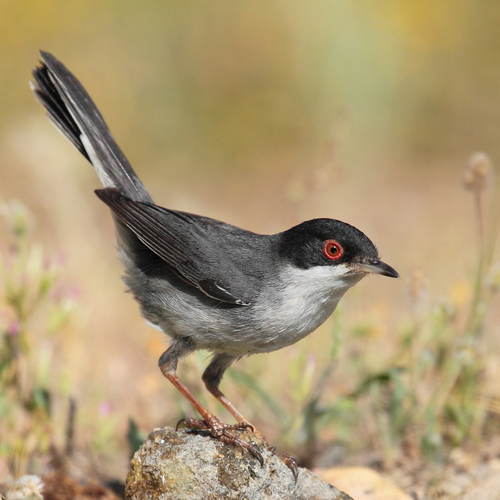
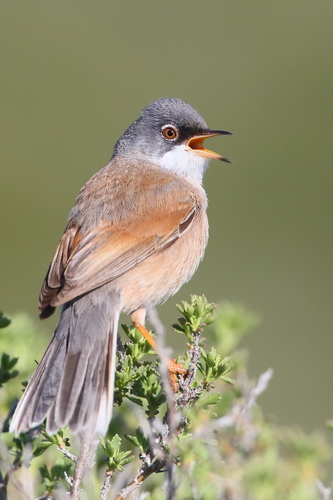
It is the largest Curruca warbler, measuring 15.5–17 cm in length and weighing 22–36 g. Its upperparts are mainly grey, and its underparts are whitish. Adult males have dark grey upperparts, white tips on the wing coverts and tail feathers, and heavy barring across the underparts. Females are similar to males, but are slightly paler and only have light barring. Young birds are buffy grey-brown on the upperparts and pale buff on the underparts, with very little barring, and have few obvious distinctive features. They can easily be confused with garden warblers; they differ from garden warblers by the slight barring on their tail coverts, pale fringes on their wing feathers, and their slightly larger size. Adults have yellow irises, while immature birds have dark irises. The bill is blackish with a paler base, and the legs are stout and grey-brown.
Barred warblers inhabit open country with bushes for nesting, and have very similar habitat preferences to the red-backed shrike. They build their nests in low shrubs or brambles, and lay three to seven eggs per clutch. Like most warblers, they are mainly insectivorous, but also feed extensively on berries and other soft fruit in late summer and autumn. Their song is a pleasant chattering with many clear notes, similar to the garden warbler’s song, but it is harsher, less melodious, and slightly higher pitched, with some resemblance to the song of the common whitethroat.