About Sylvia curruca (Linnaeus, 1758)
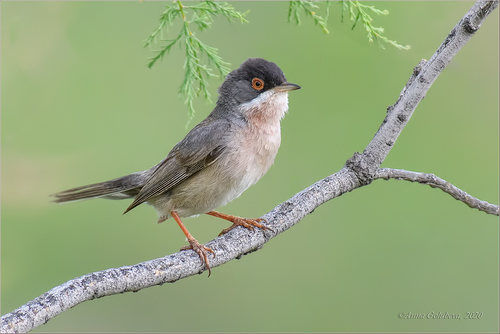
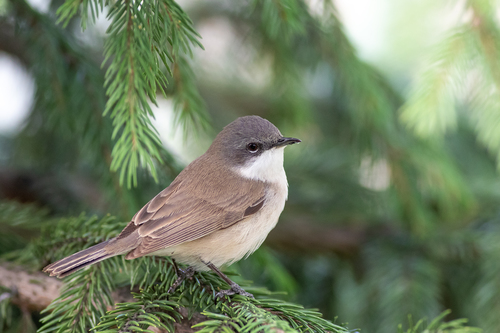
The lesser whitethroat, currently classified scientifically as Sylvia curruca (Linnaeus, 1758) and also referenced under the synonym Curruca curruca, is a common and widespread Old World warbler. It breeds in temperate Europe excluding the southwest, as well as in the western and central Palearctic. This small passerine bird is strongly migratory, and spends the winter in Africa just south of the Sahara, Arabia, and India. Unlike many sylviid warblers, male and female lesser whitethroats are almost identical in appearance. This is a small species, with a grey back, whitish underparts, a grey head marked by a darker "bandit mask" running through the eyes, and a white throat. It is slightly smaller than the common whitethroat, and does not have the chestnut wings and uniform head-face coloration that characterize the common whitethroat. The song of the lesser whitethroat is a fast, rattling sequence of tet or che calls, which is quite distinct from the scolding song of the common whitethroat. Like most warblers, the lesser whitethroat is insectivorous, but it will also eat berries and other soft fruit. It lives in fairly open country and cultivated areas, with large bushes available for nesting and scattered trees. It builds its nest in low shrubs or brambles, and lays between 3 and 7 eggs per clutch.