About Sylvia conspicillata Temminck, 1820
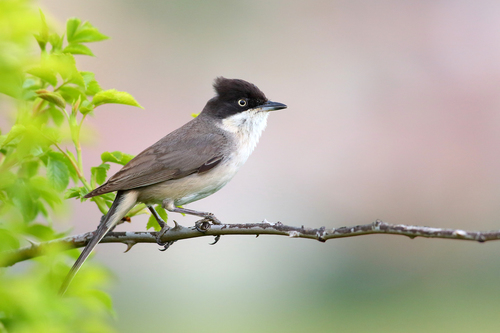
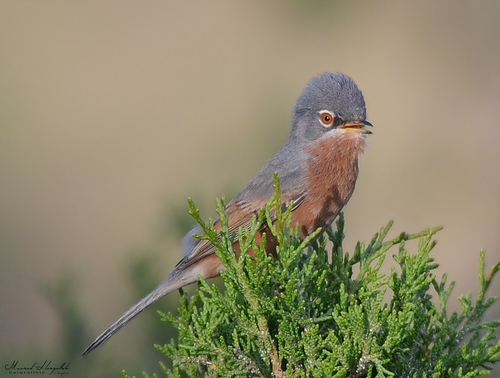
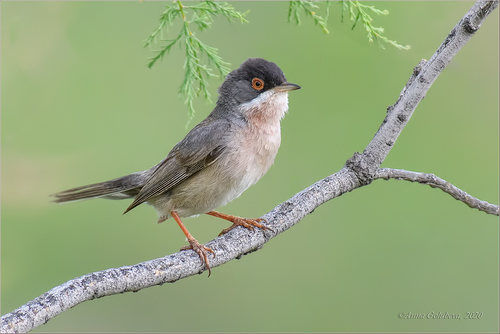
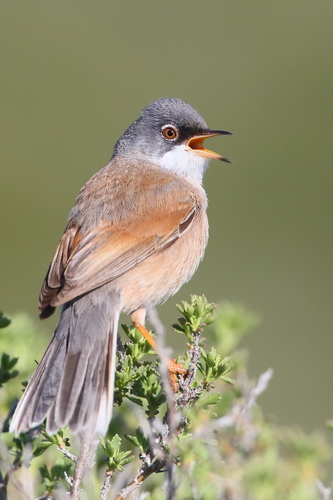
The spectacled warbler (scientific name Curruca conspicillata, also referenced as Sylvia conspicillata Temminck, 1820) is a species of passerine bird that belongs to the warbler genus Curruca within the family Sylviidae. Its specific epithet conspicillata comes from the Latin word conspicillum, meaning a place to look from, which translates to "spectacled". This species breeds in northwest Africa, southwest Europe from Iberia to Italy, and further east on eastern Mediterranean islands and coastal regions. Most populations in Africa are year-round residents, while other populations migrate to winter across a broader area of northern and western Africa and Egypt. The spectacled warbler is a rare vagrant to northern and western Europe, and also occurs on several Atlantic islands. The subspecies orbitalis has been proposed for the Cape Verde Islands population of this bird. The previously recognized subspecies bella, described for birds from Madeira, is now usually included within this species, along with populations from the Canary Islands. On the Canary Islands, the species is quite common except on El Hierro, where it is known locally as zarzalero y ratonero. Spectacled warblers are very small warblers, with coloration that is intermediate between common whitethroats and Tristram's warblers. They are brown on their upperparts and buff on their underparts, with chestnut wing patches and a white throat. Adult males have a grey head and a white eye ring that gives the species its common name. Immature spectacled warblers can be confused with both whitethroats and western subalpine warblers, making them difficult to identify in the field. Their song is a fast, high-pitched warble. The precise evolutionary relationships of the spectacled warbler are not yet known with certainty. Apart from its unique white eye ring, its intermediate appearance does give reasonable indication of its relationships, and researchers have confirmed at minimum that it is not the closest living relative of Tristram's warbler. These small passerine birds live in dry open country with bushes. They lay between 3 and 6 eggs in a nest built in a bush. Like its close relatives, the spectacled warbler feeds primarily on insects.