About Sylvia communis Latham, 1787
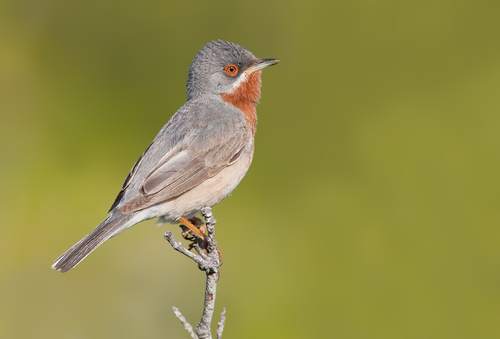
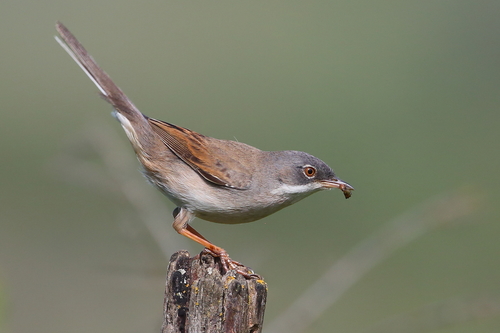
This species is one of several Curruca that show distinct plumage differences between males and females. Both sexes are primarily brown on their upper bodies and buff on their under bodies, with chestnut-colored fringes on their secondary remiges. Adult males have a grey head and a white throat. Females do not have a grey head, and their throat color is duller than that of males. The song of the common whitethroat is fast and scratchy, with a scolding tone. Its hoarse, slightly nasal call sounds like wed-wed or woid-woid. Its warning cry is a long-drawn, rough tschehr, which is similar to the warning cry of the Dartford warbler. The common whitethroat lives in open country and cultivated areas, with bushes available for nesting. It builds its nest in low shrubs or brambles, and lays between 3 and 7 eggs per clutch. Like most warblers, the common whitethroat is primarily insectivorous, but it will also eat berries and other soft fruit. In Europe, western and eastern populations of common whitethroats have contrasting strategies for moulting and building up energy stores before migration, which let them make the most of available food supplies before leaving their breeding and non-breeding grounds.