About Suillus variegatus (Sw.) Richon & Roze
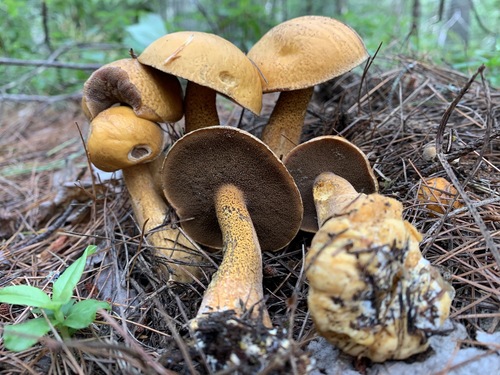
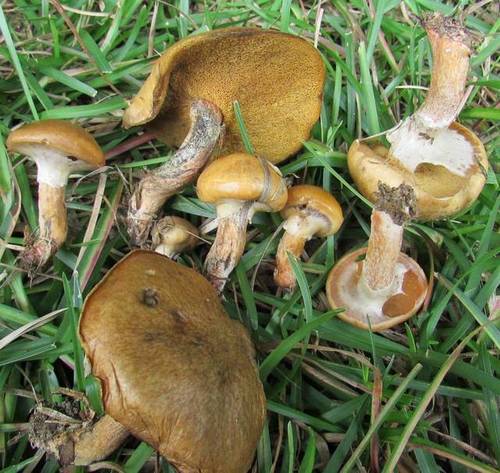
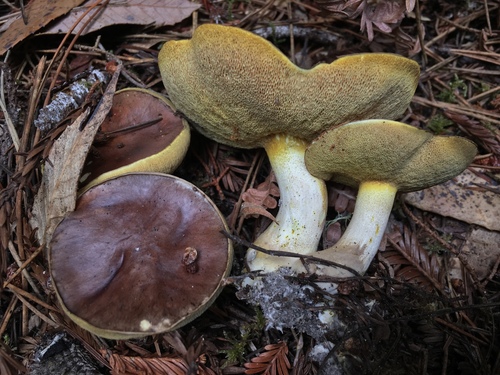
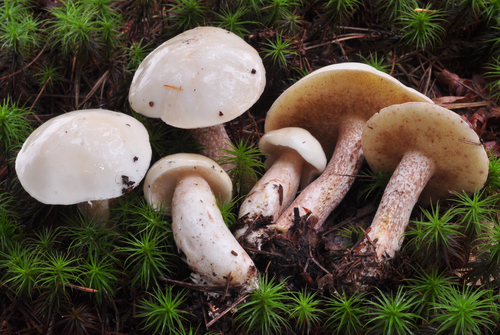
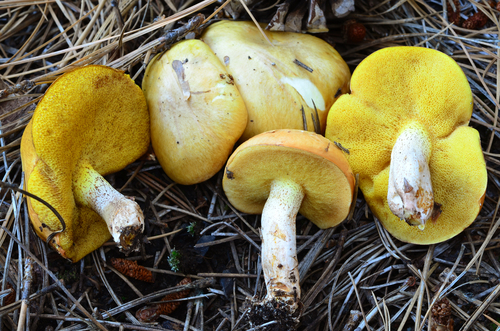
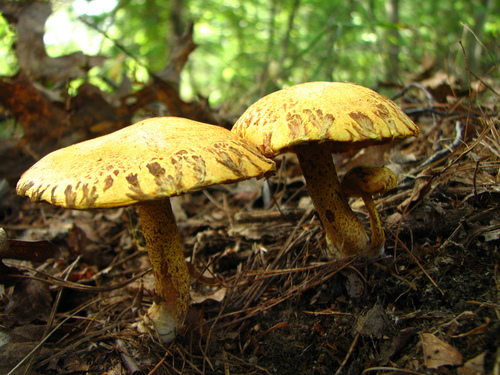
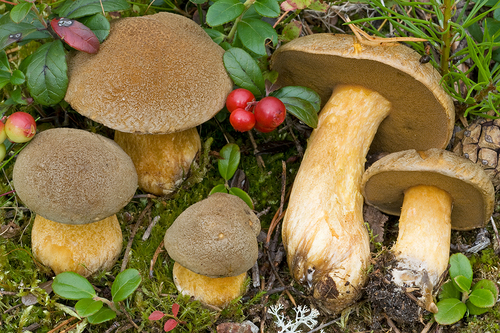
This species of fungus has a cap that ranges from 6 to 13 cm in diameter. The cap is colored rusty, tawny, or ochraceous, and has a velvety or downy texture when young. As it matures, the cap surface becomes smoother, and can even feel greasy or tacky during wet periods. The stem is ochre, becoming more yellow toward its top, and may have a rust-colored flush at the base; it is sometimes slightly bulbous. The flesh is pale lemon yellow, and may turn very slightly blue when cut. The pores are ochre, darkening to a more cinnamon shade as the fungus ages, and the spore print is walnut brown. S. variegatus is said to have a smell similar to the Earth ball fungus Scleroderma. Variegatic acid, an orange pigment, was first isolated from Suillus variegatus. This pigment has strong antioxidant properties, and has a nonspecific inhibitory effect on cytochrome P450 enzymes. When mushroom tissue containing variegatic acid is exposed to air, the chemical is enzymatically oxidized to blue quinone methide anions. Suillus variegatus forms mycorrhizal associations with two-needle pine trees, and appears frequently alongside these trees in late summer. It is often found growing with heathers and other acid-loving plants on sandy soils. The species is widespread in Europe, adjacent parts of Asia, and North America.