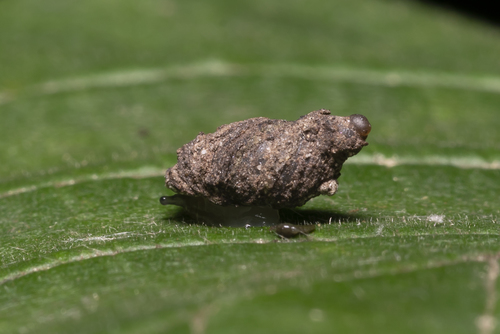
About Succinella oblonga (Draparnaud, 1801)
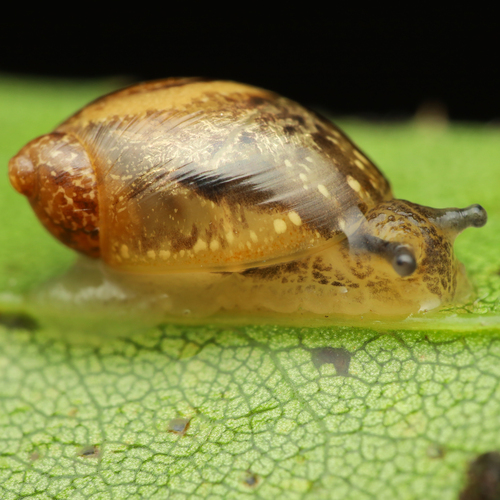
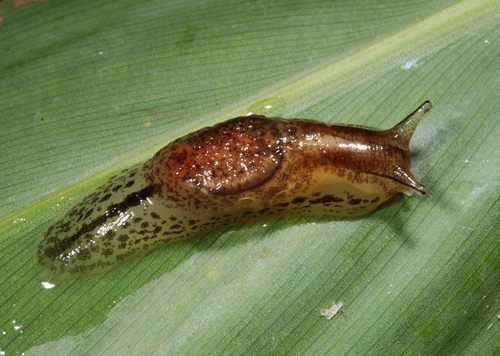
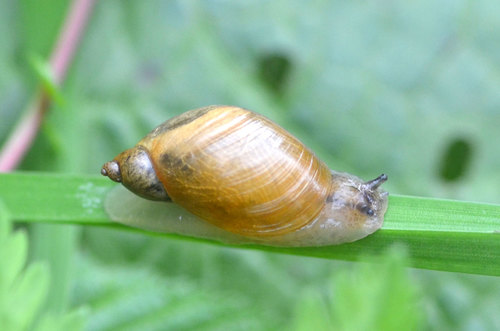
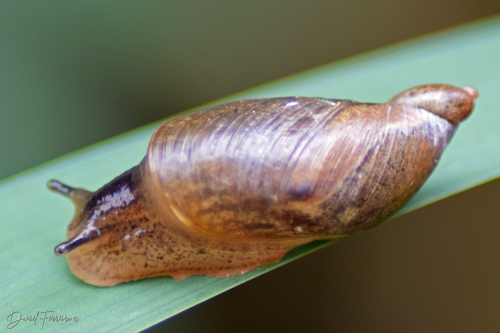
Succinella oblonga, first described by Draparnaud in 1801, has a shell that is approximately 8 millimeters in height and up to 4.5 millimeters in width. Its shell contains 3 to 3½ strongly arched whorls, which are separated from one another by a deep suture. The final whorl is highly inflated, and the height of the aperture makes up about half of the total height of the shell. The shell is dextral with relatively thick walls, is opaque, and has a matte surface. Coastal specimens have amber-colored shells, while inland specimens are most often pale yellowish grey to greenish white. The shell surface is rough, with somewhat irregular growth bands, and the surface layer is often covered in dirt or droppings for camouflage. The soft body of the animal is mostly grey in colour. The shell of Succinella oblonga closely resembles the shell of Quickella arenaria; these two species can only be distinguished by anatomical differences. Specifically, S. oblonga has a long penis with an epiphallus, a long vas deferens, and no black spot at the point where the retractor inserts into the penis. This species is distributed throughout Europe, including Latvia, Bulgaria, Slovakia, Poland, the Czech Republic, Ukraine, Netherlands, Great Britain, and Ireland among other areas.